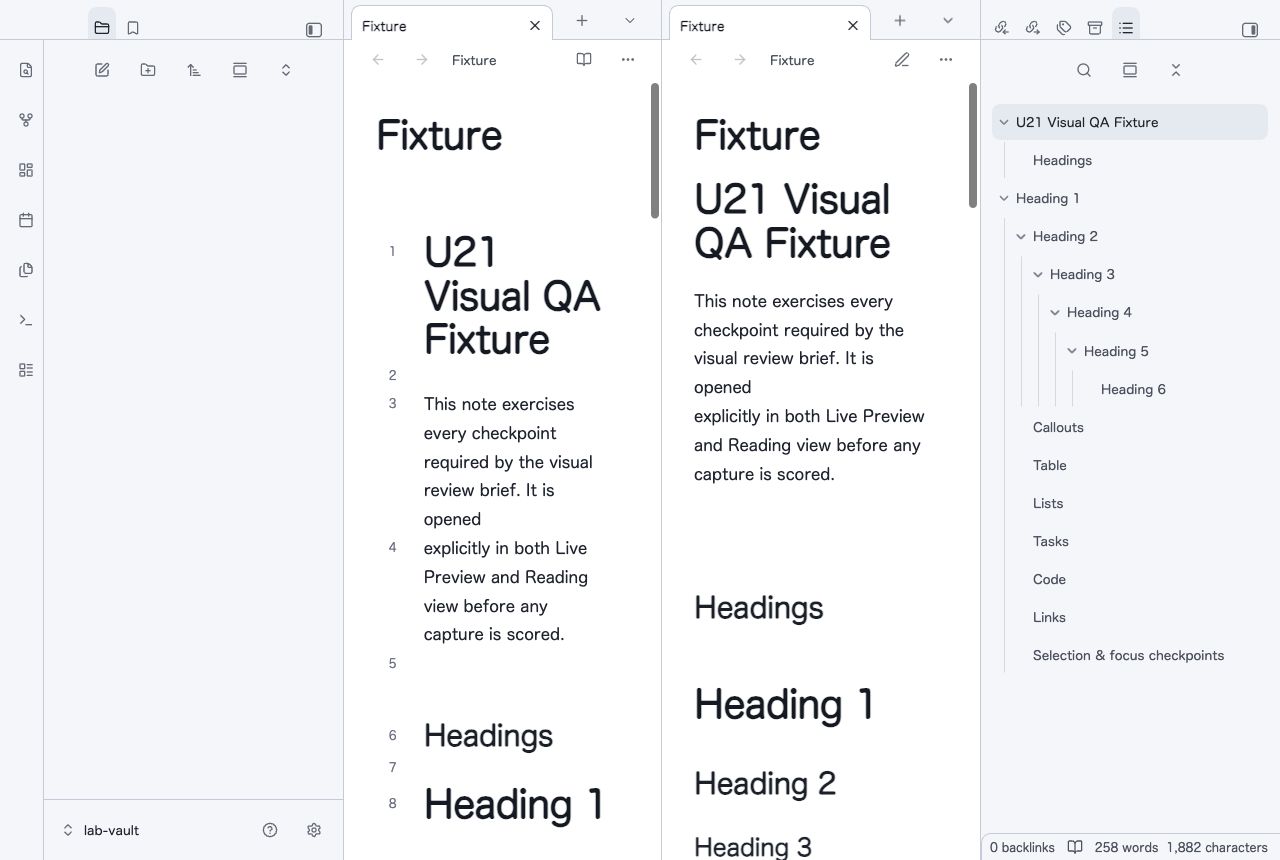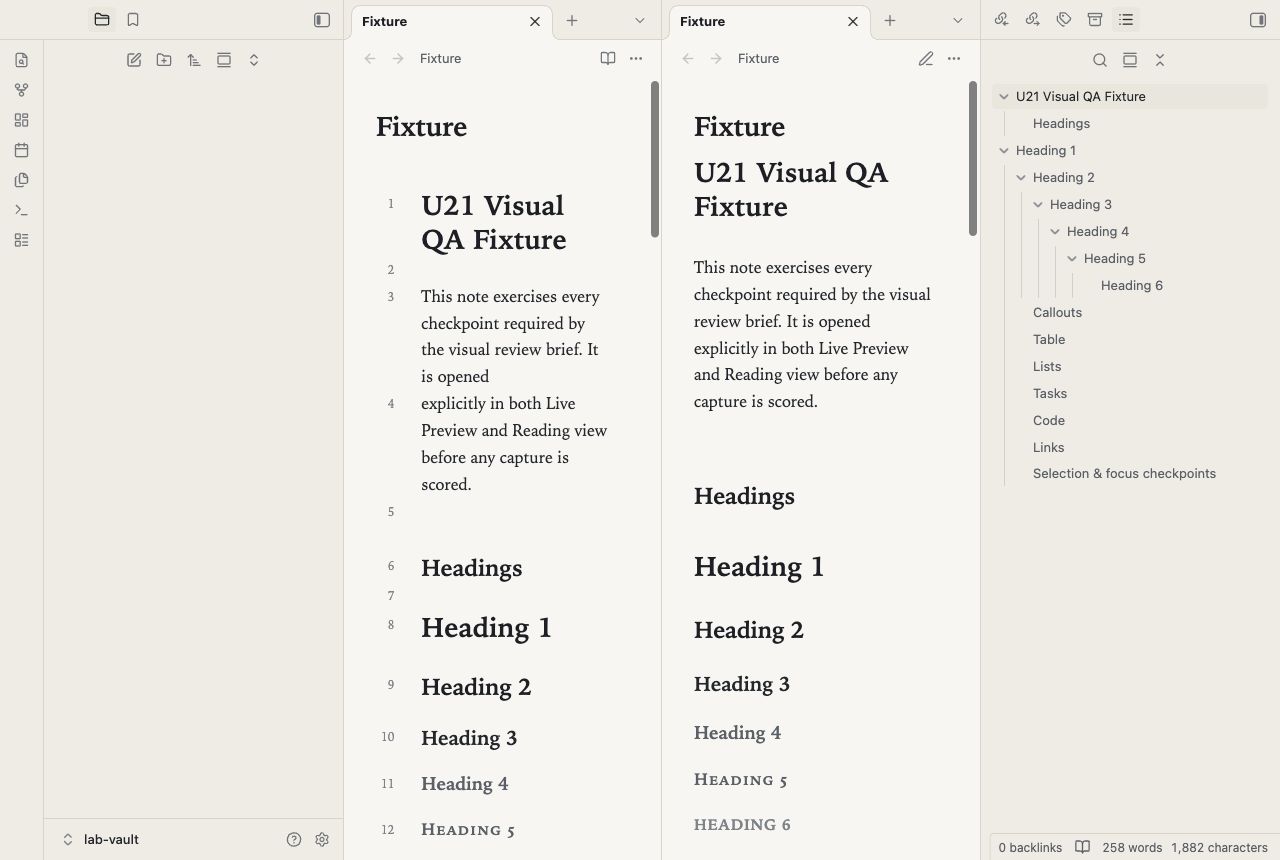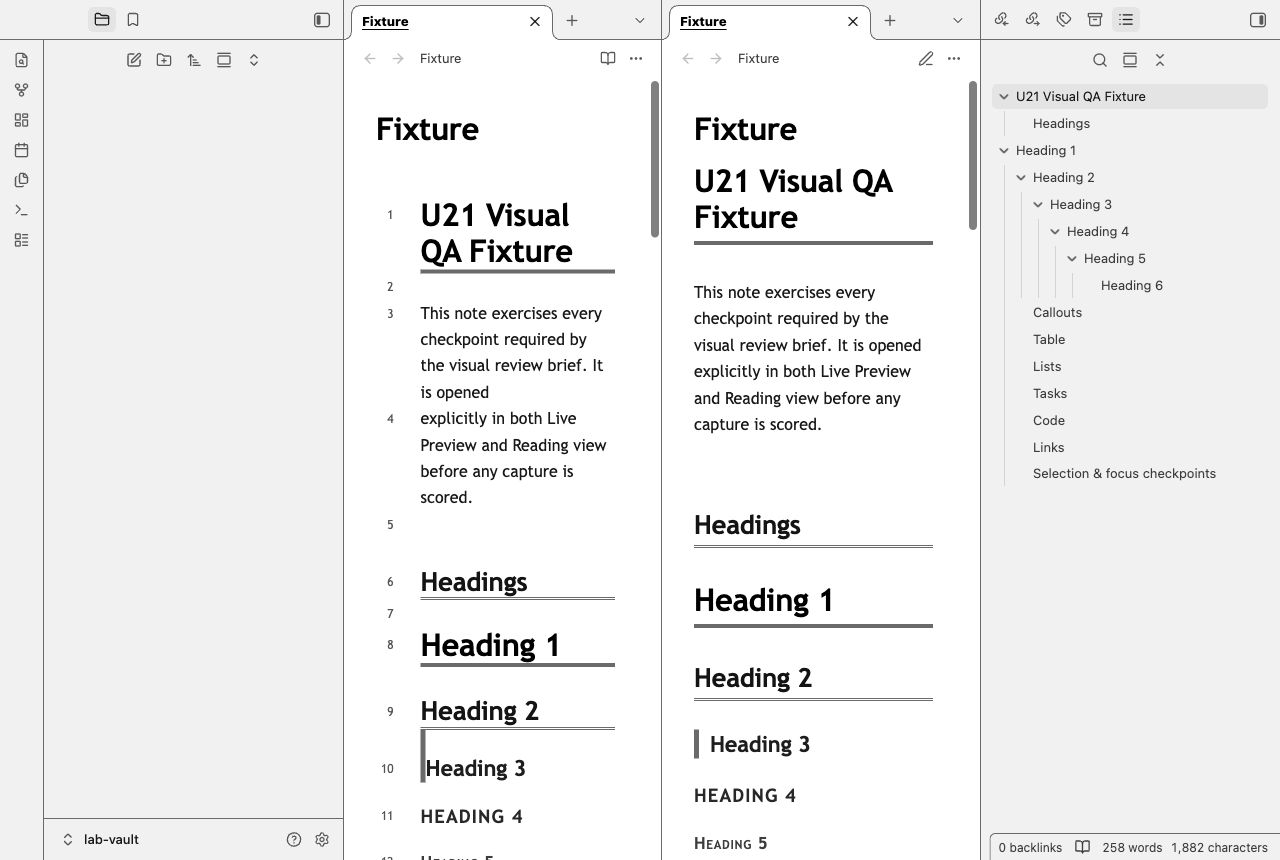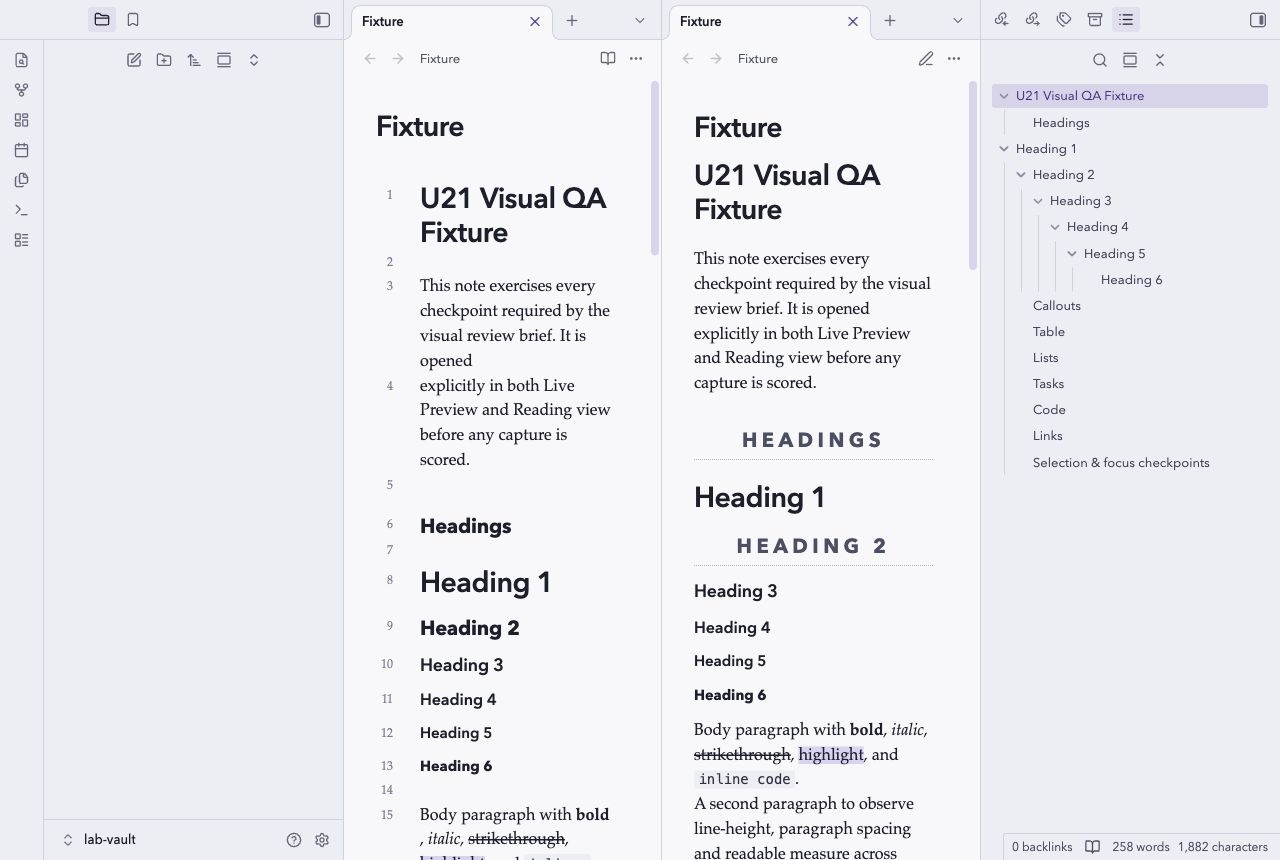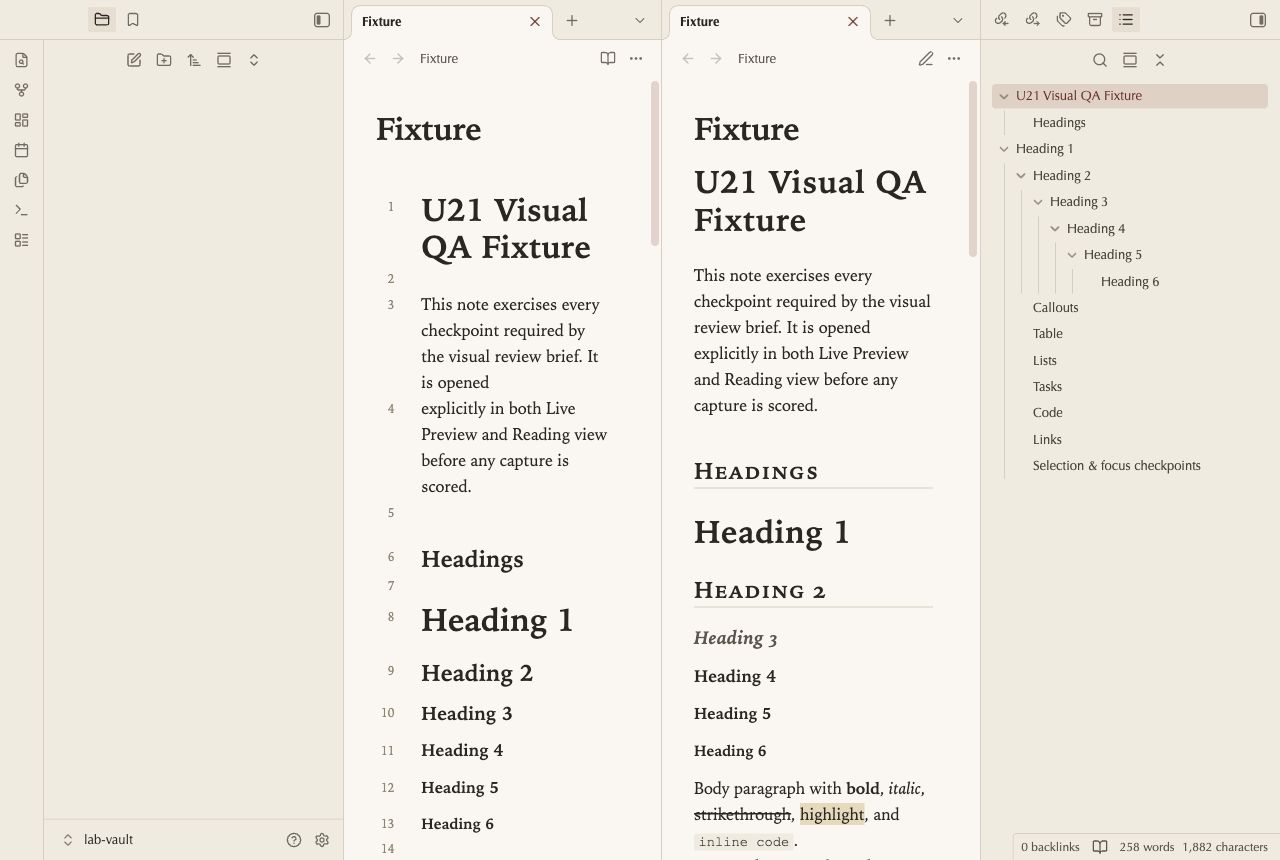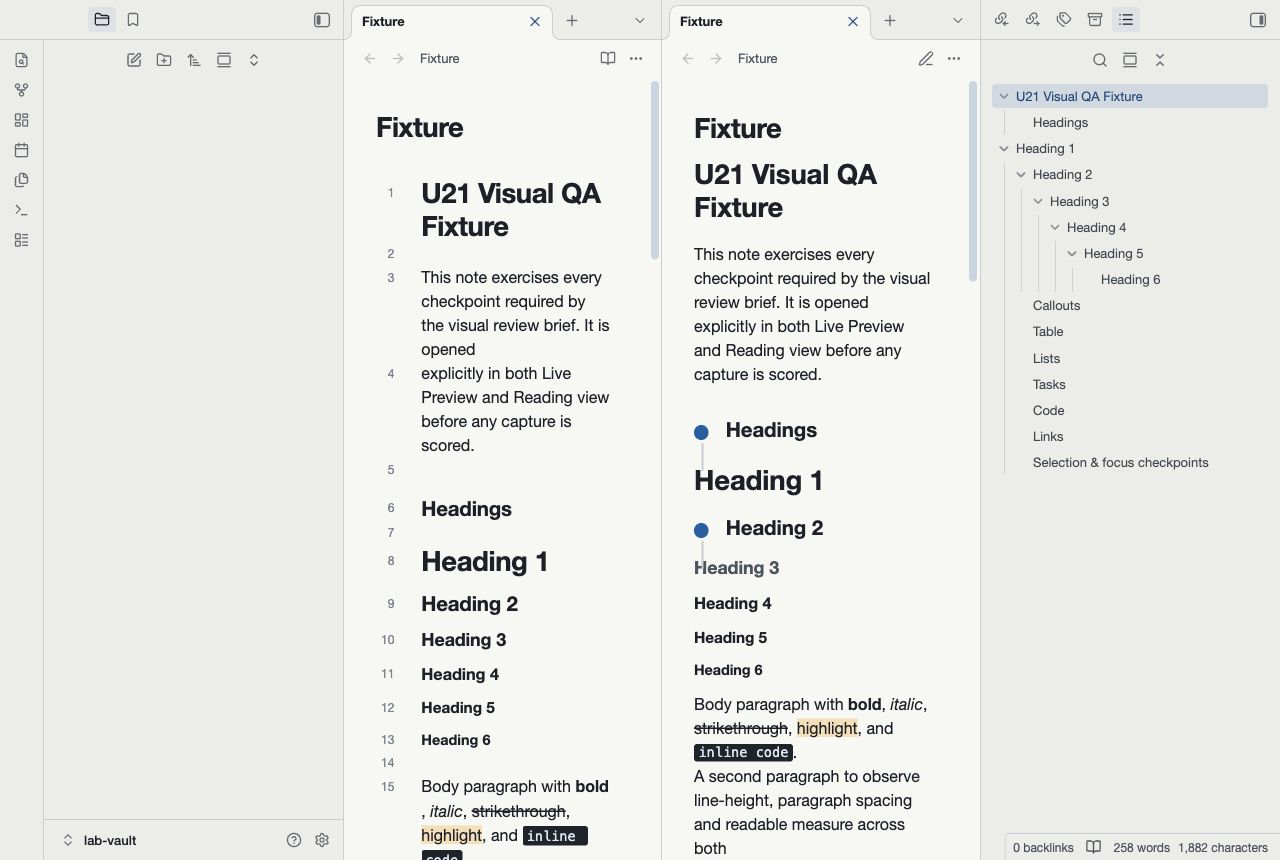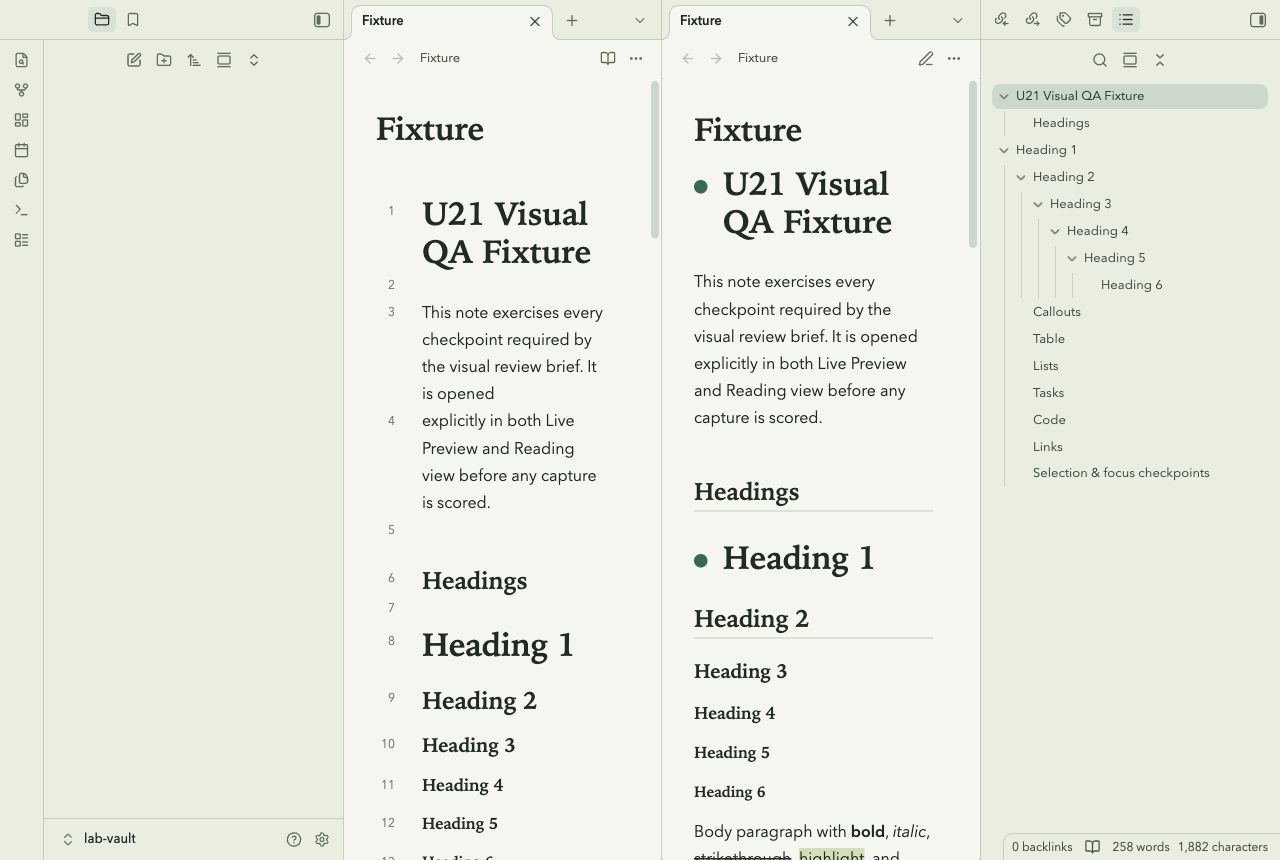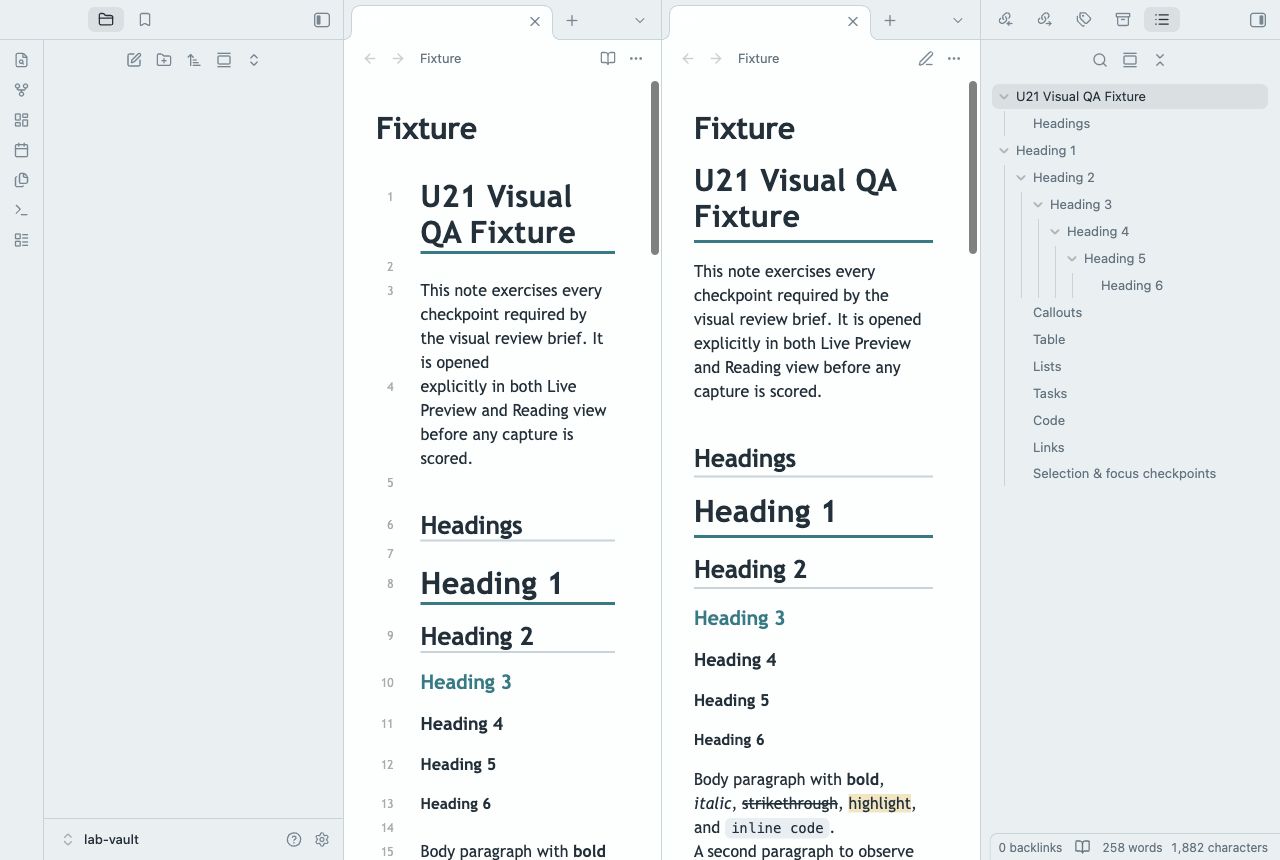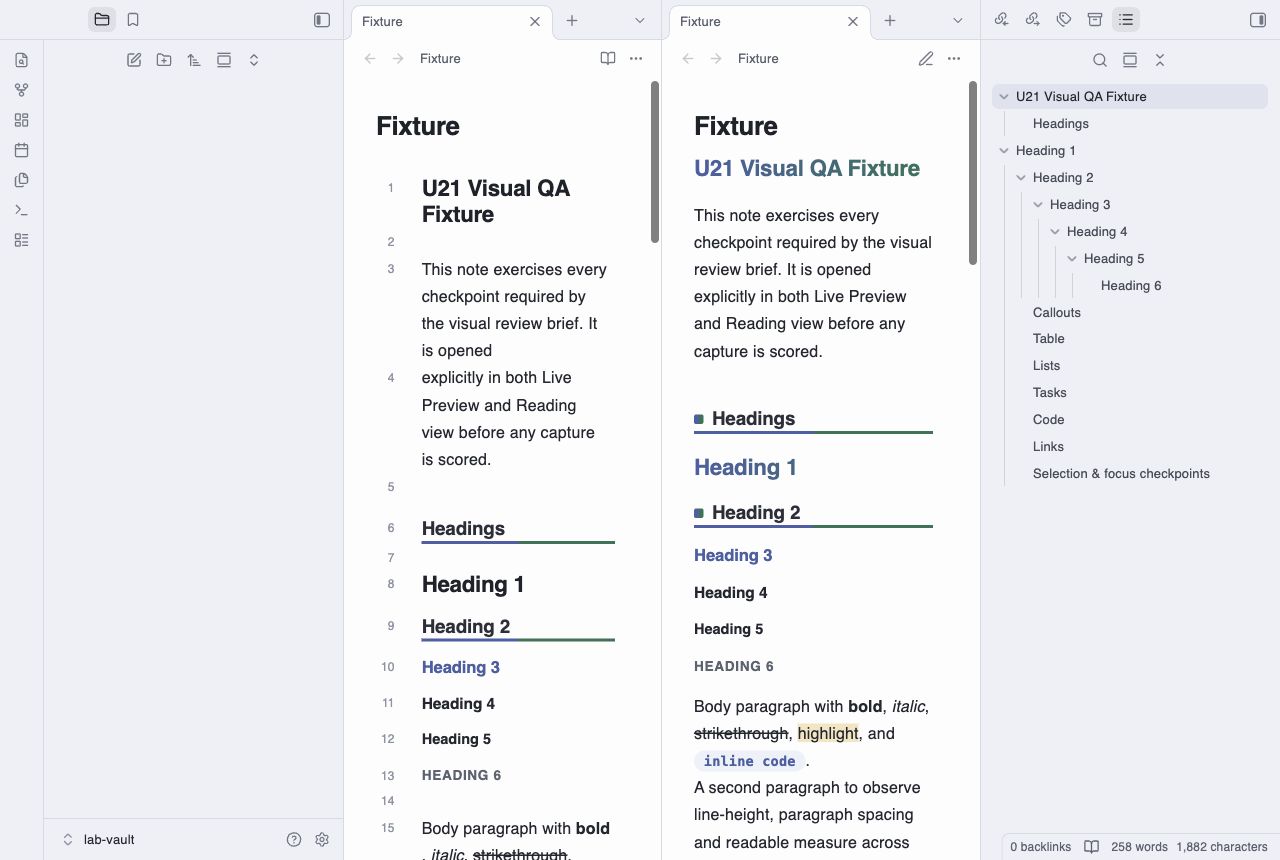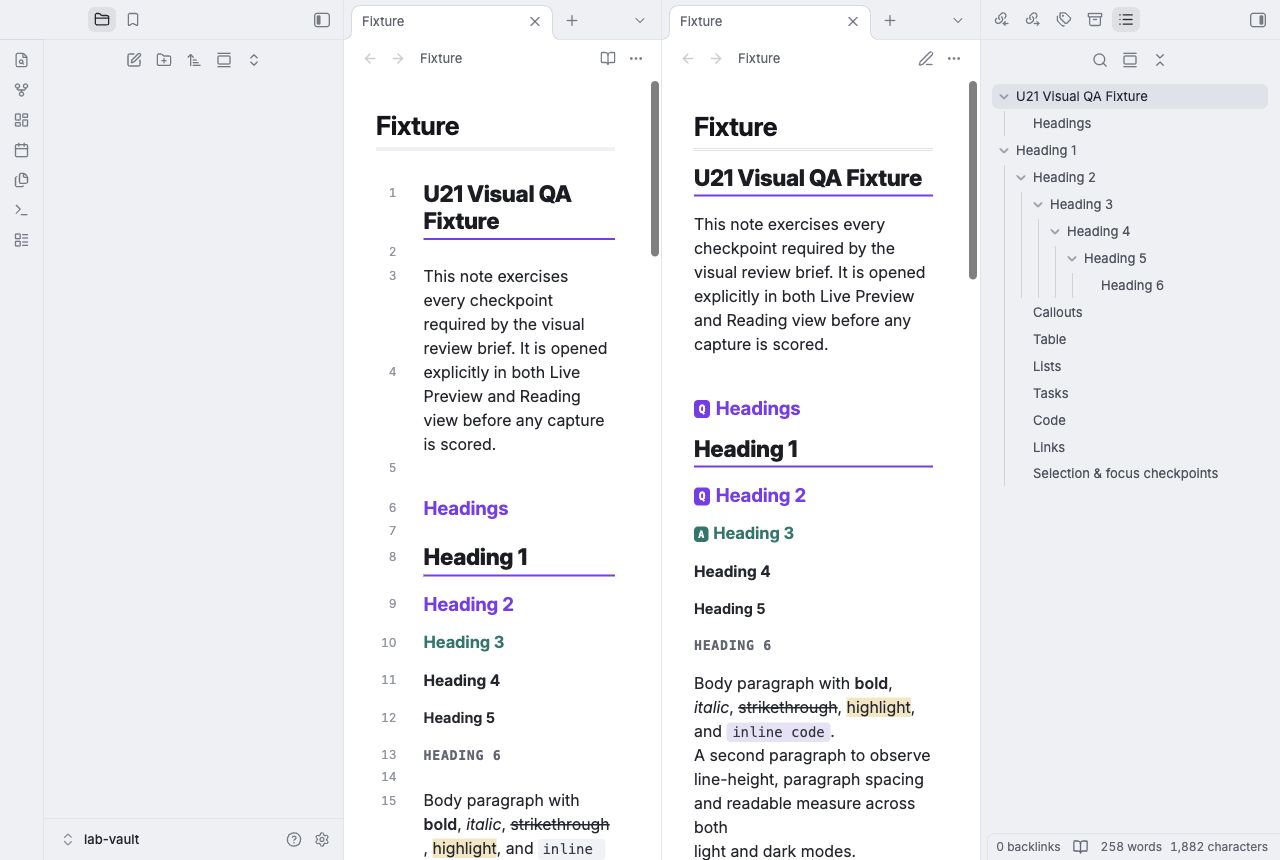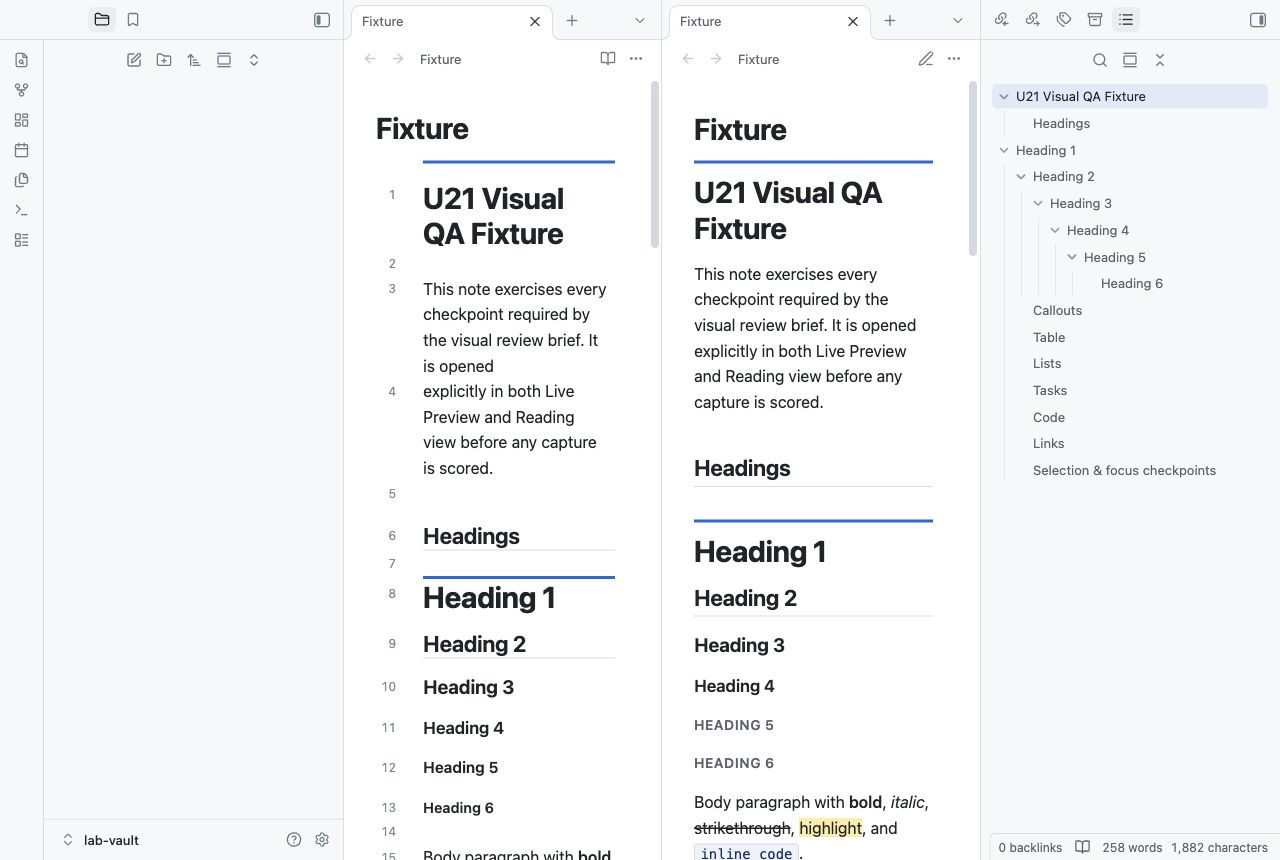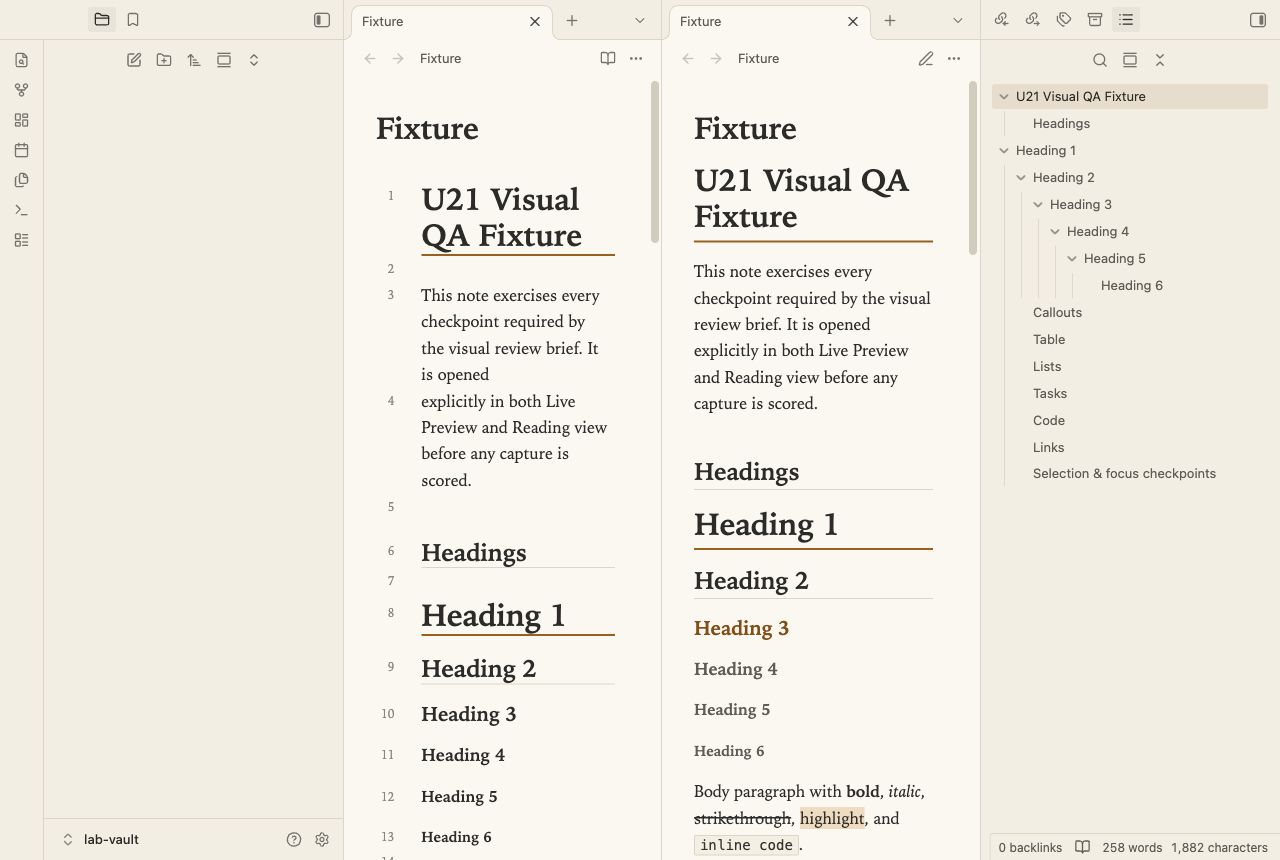
Finding Aid
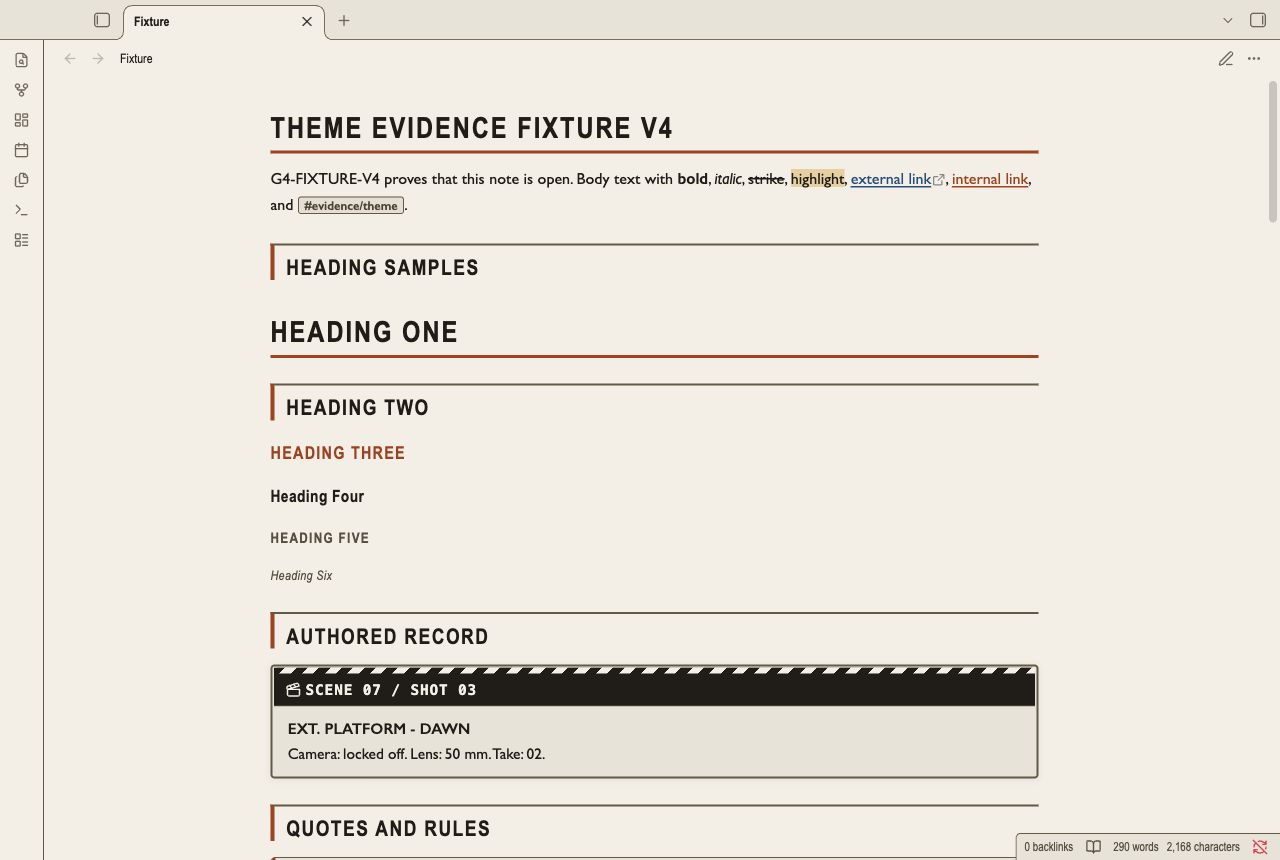
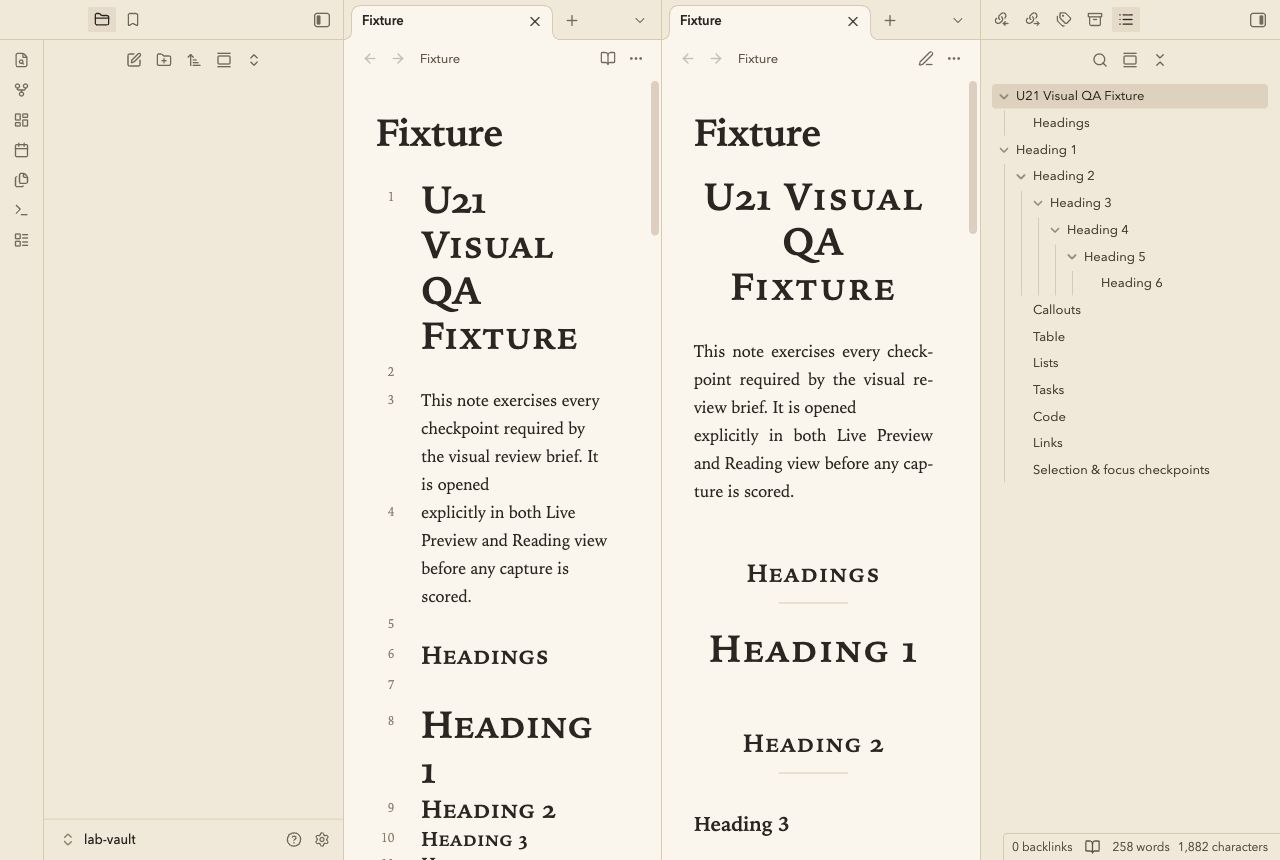
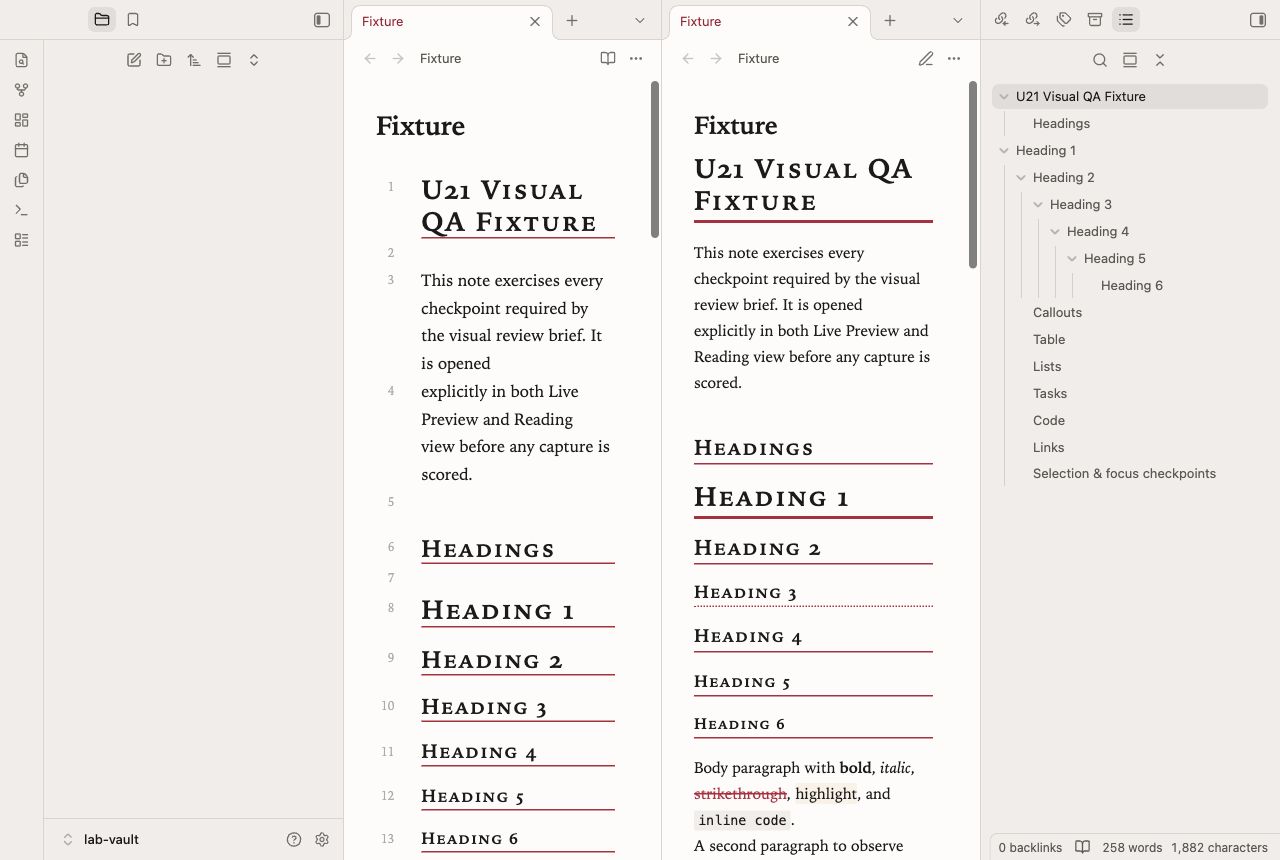
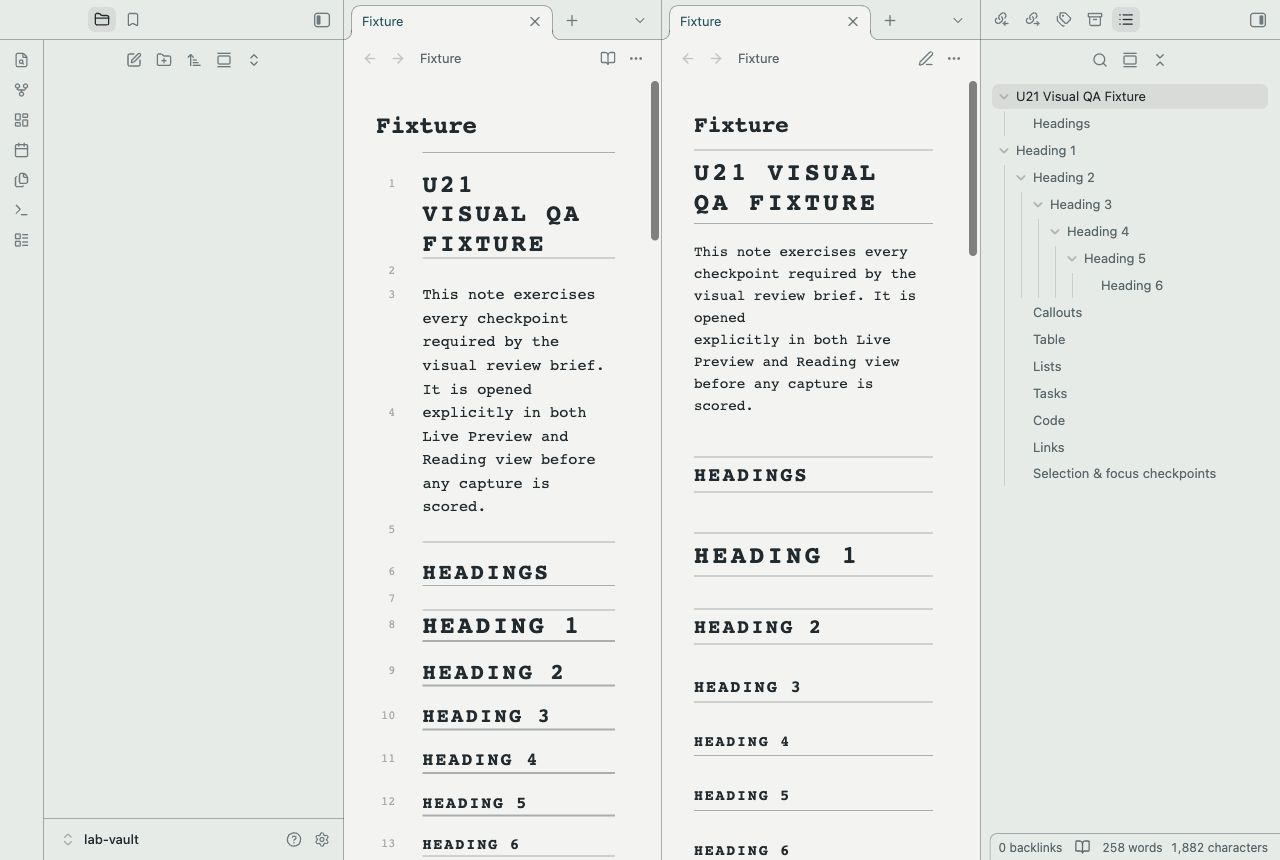
A light and dark Obsidian theme for archive inventories.
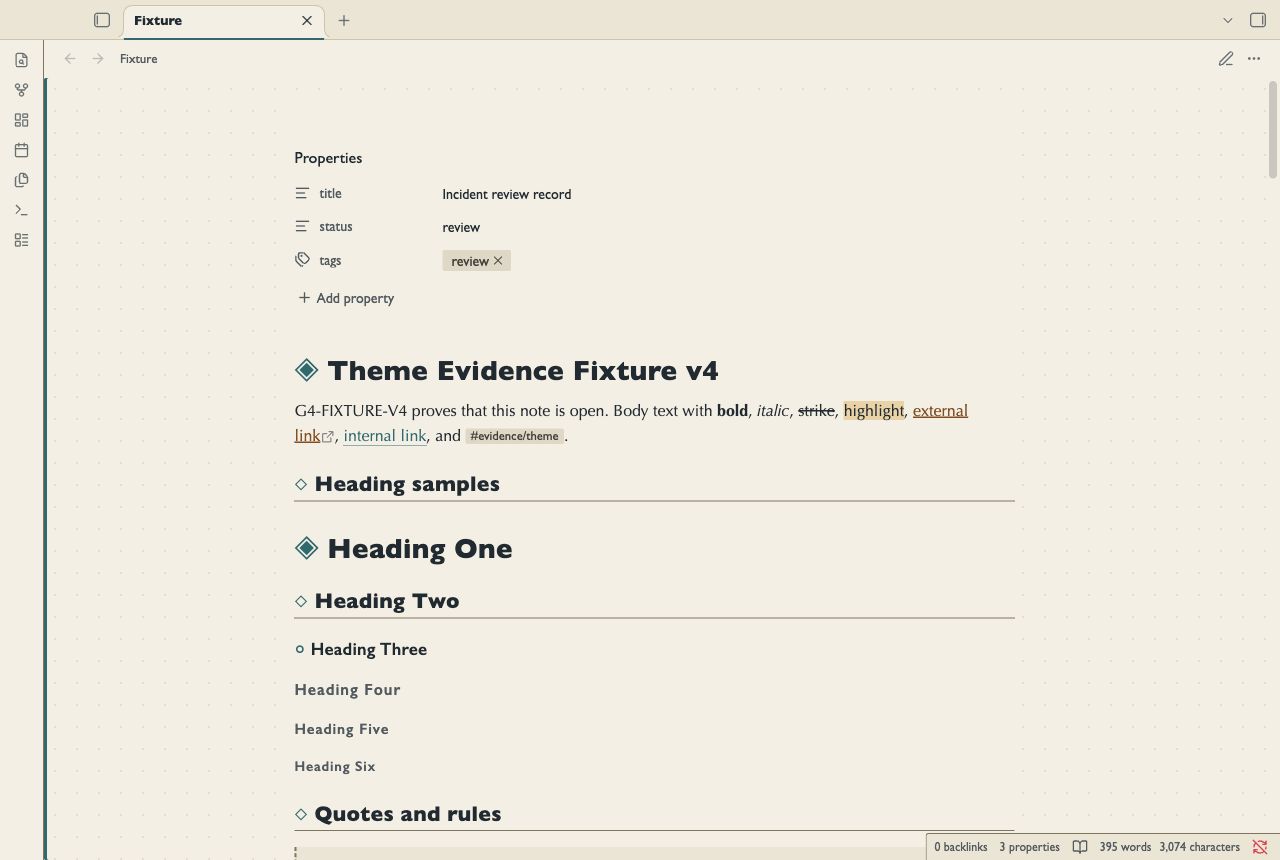
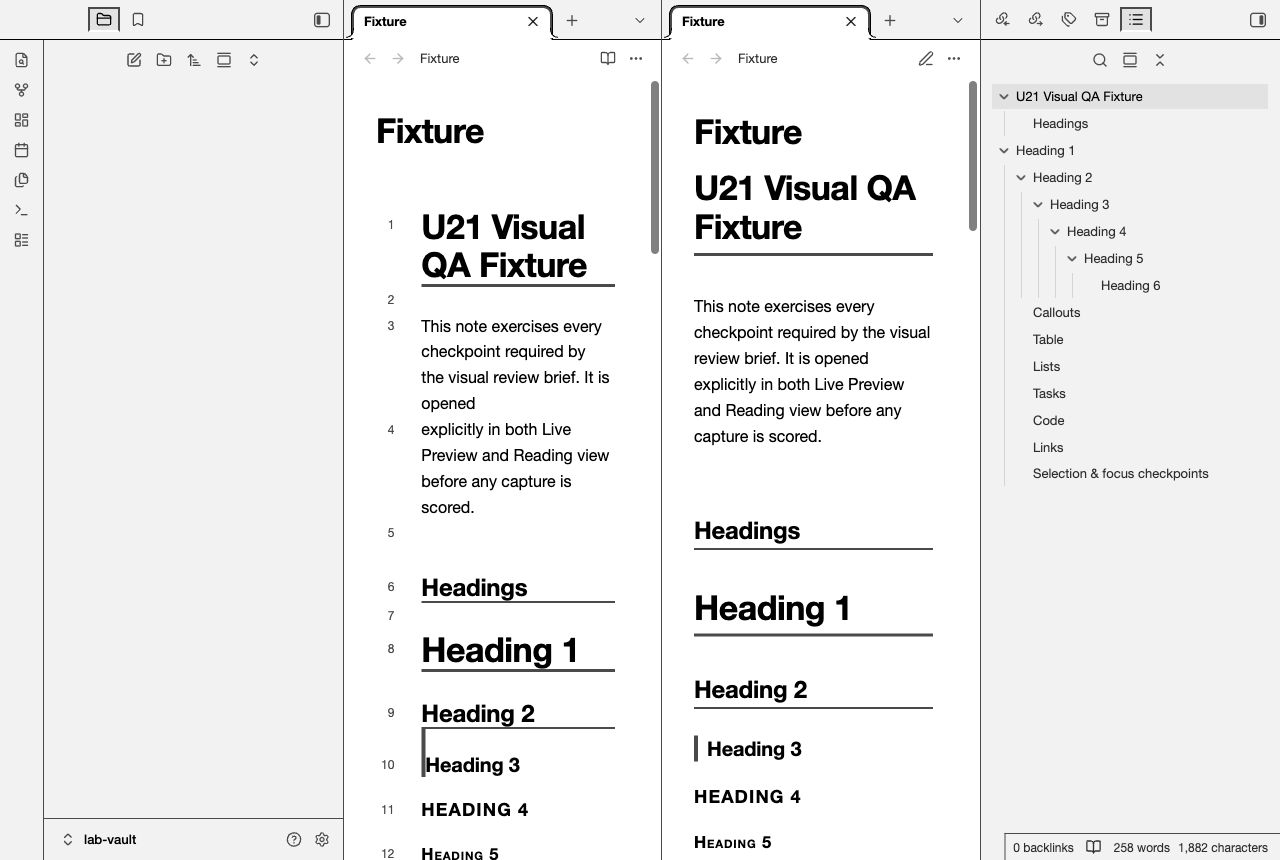
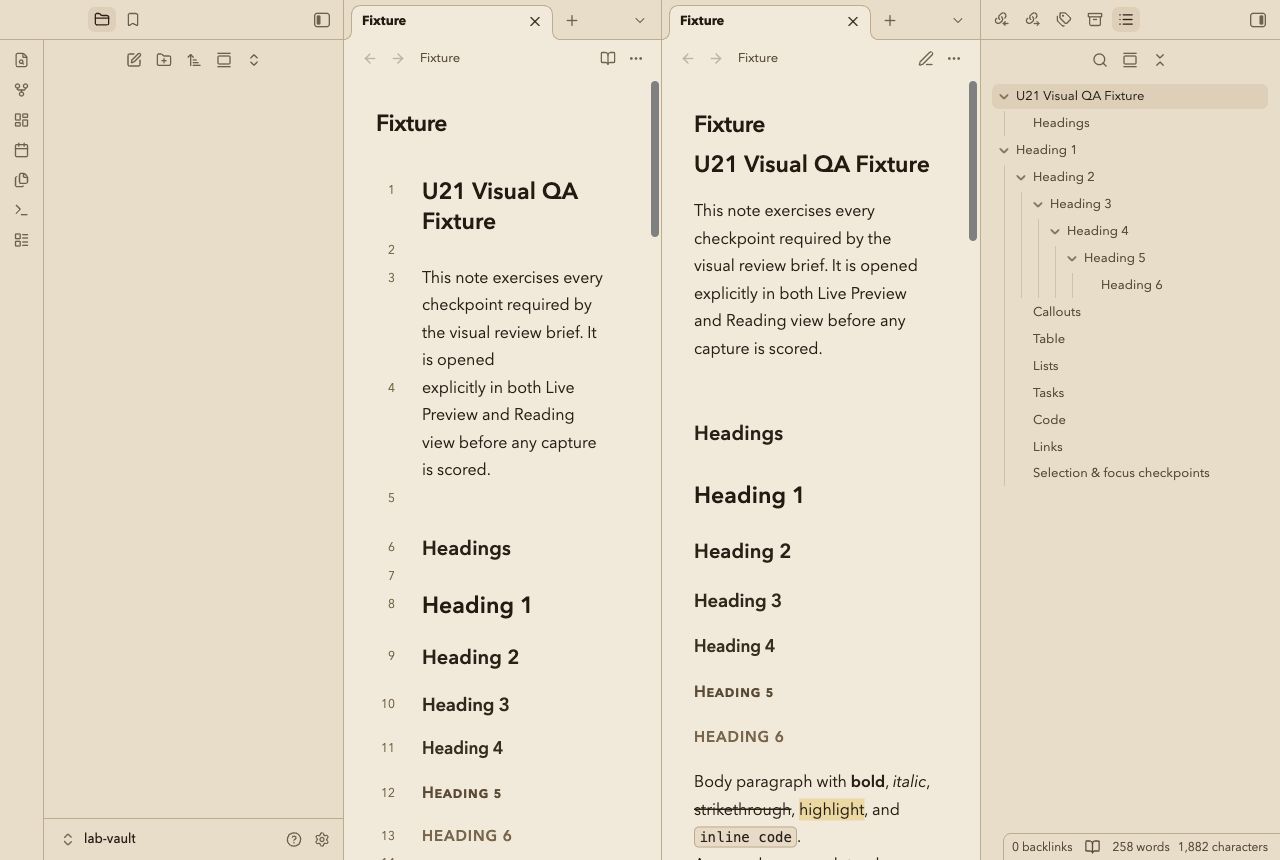
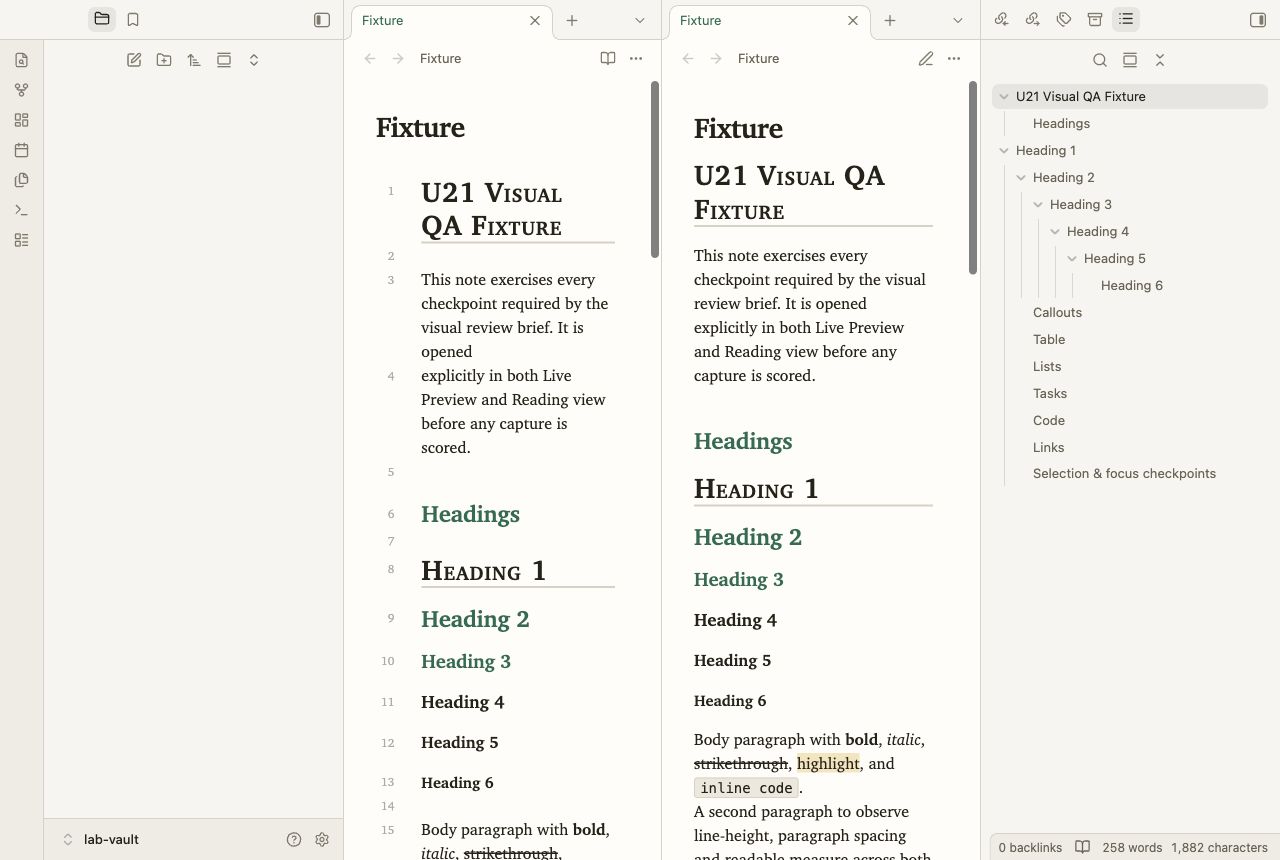
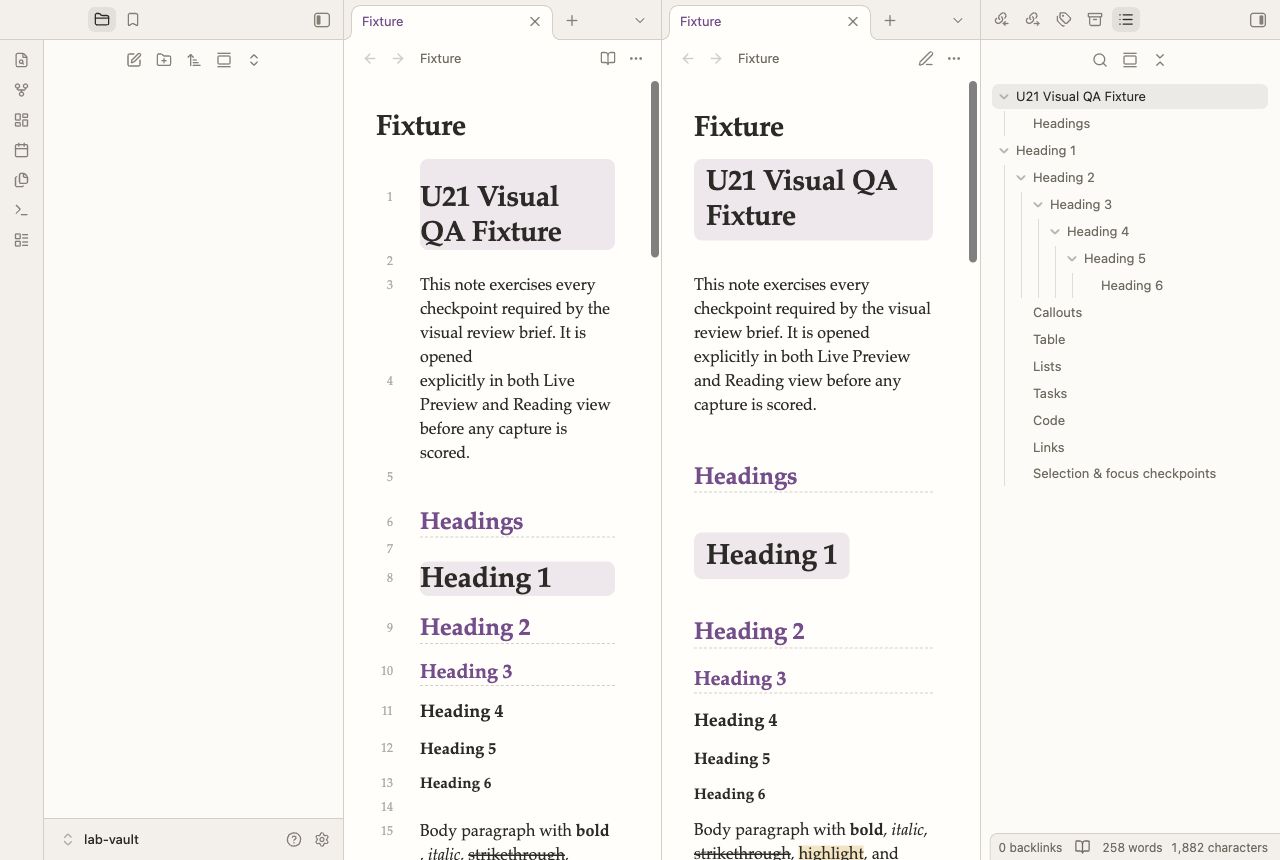
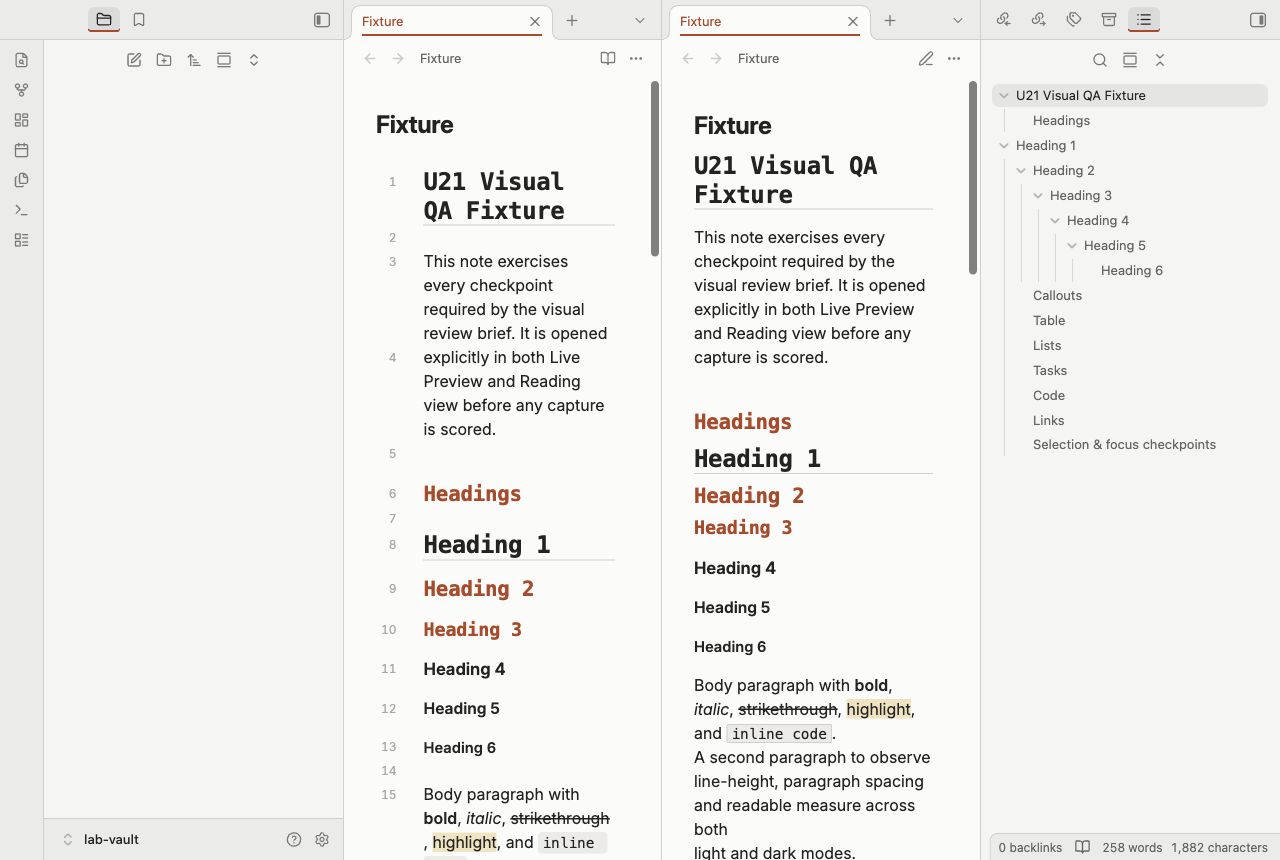
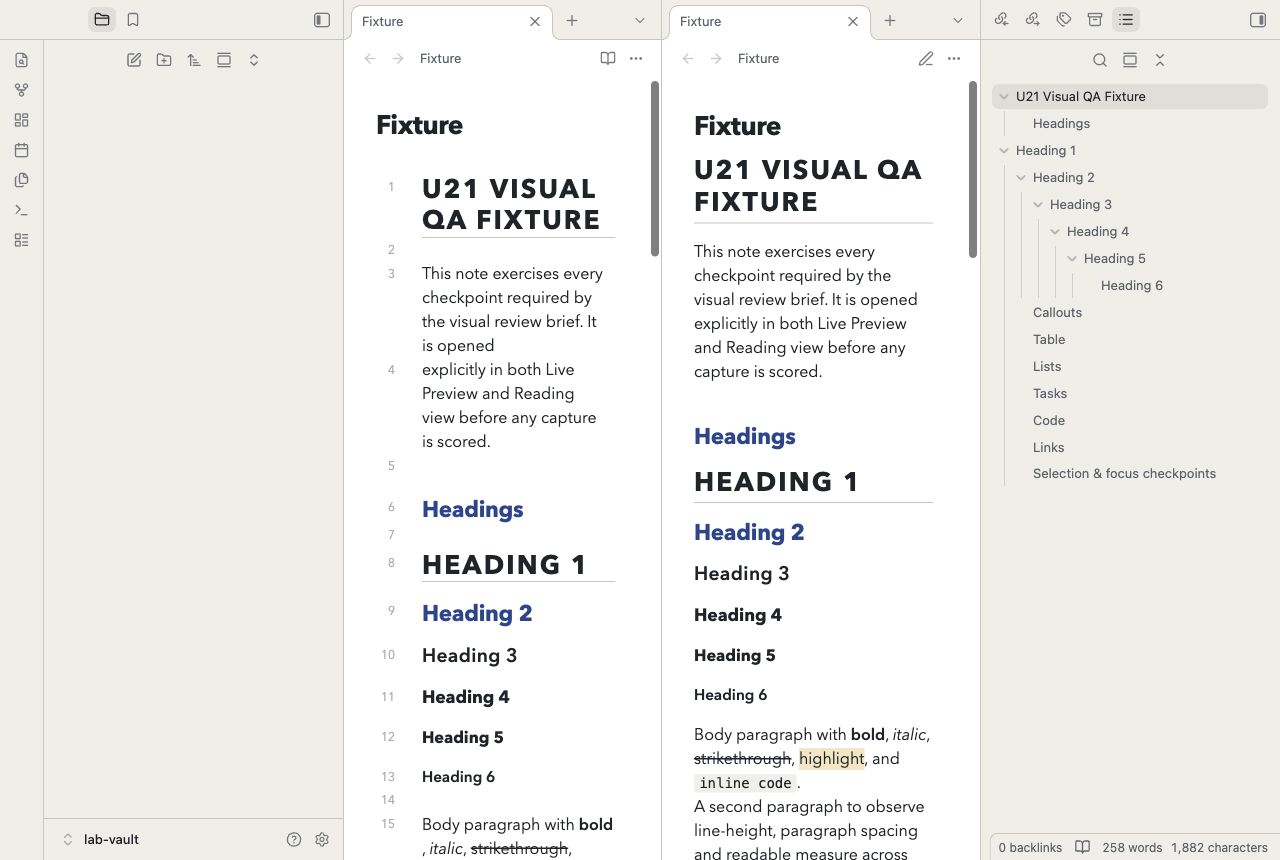
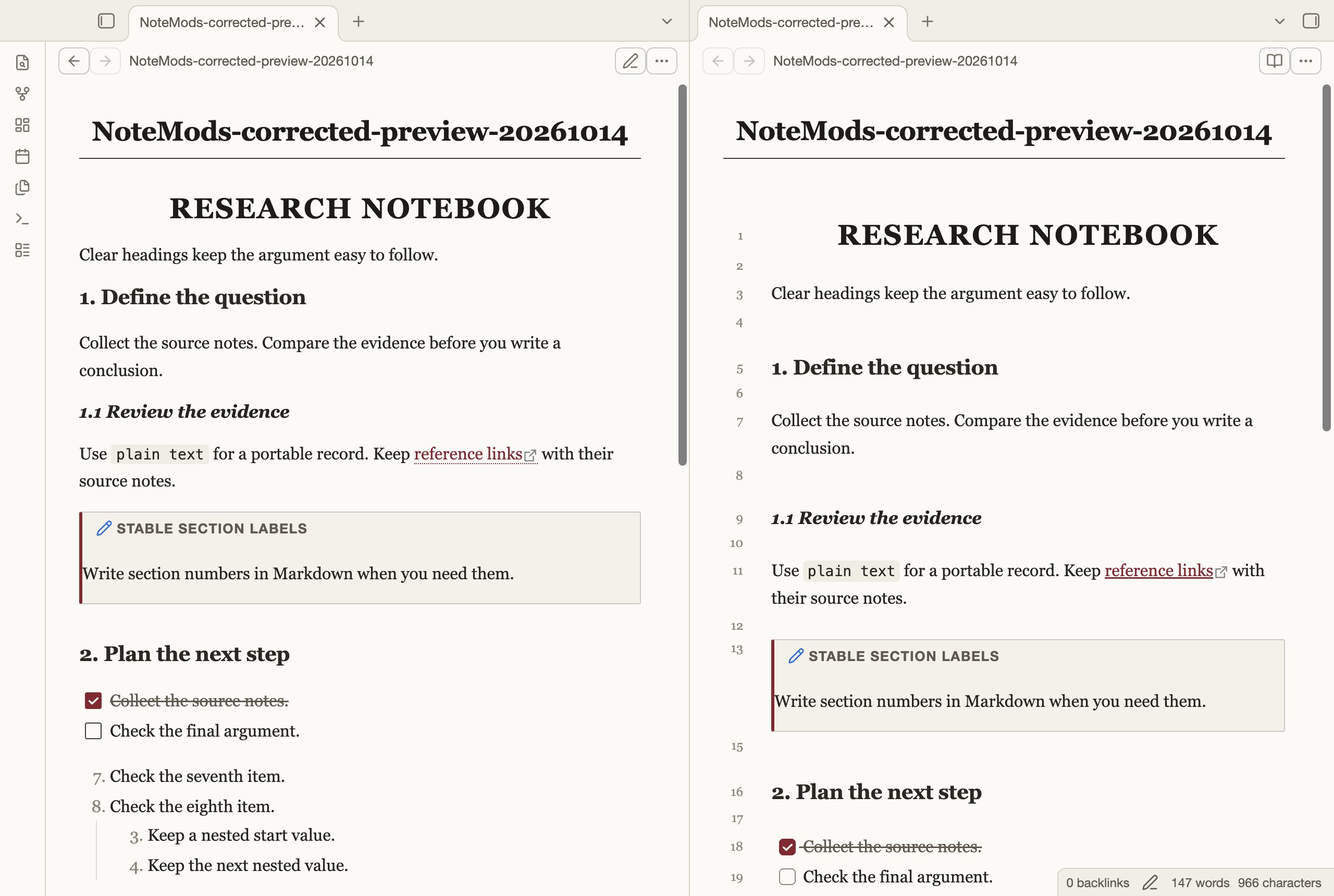
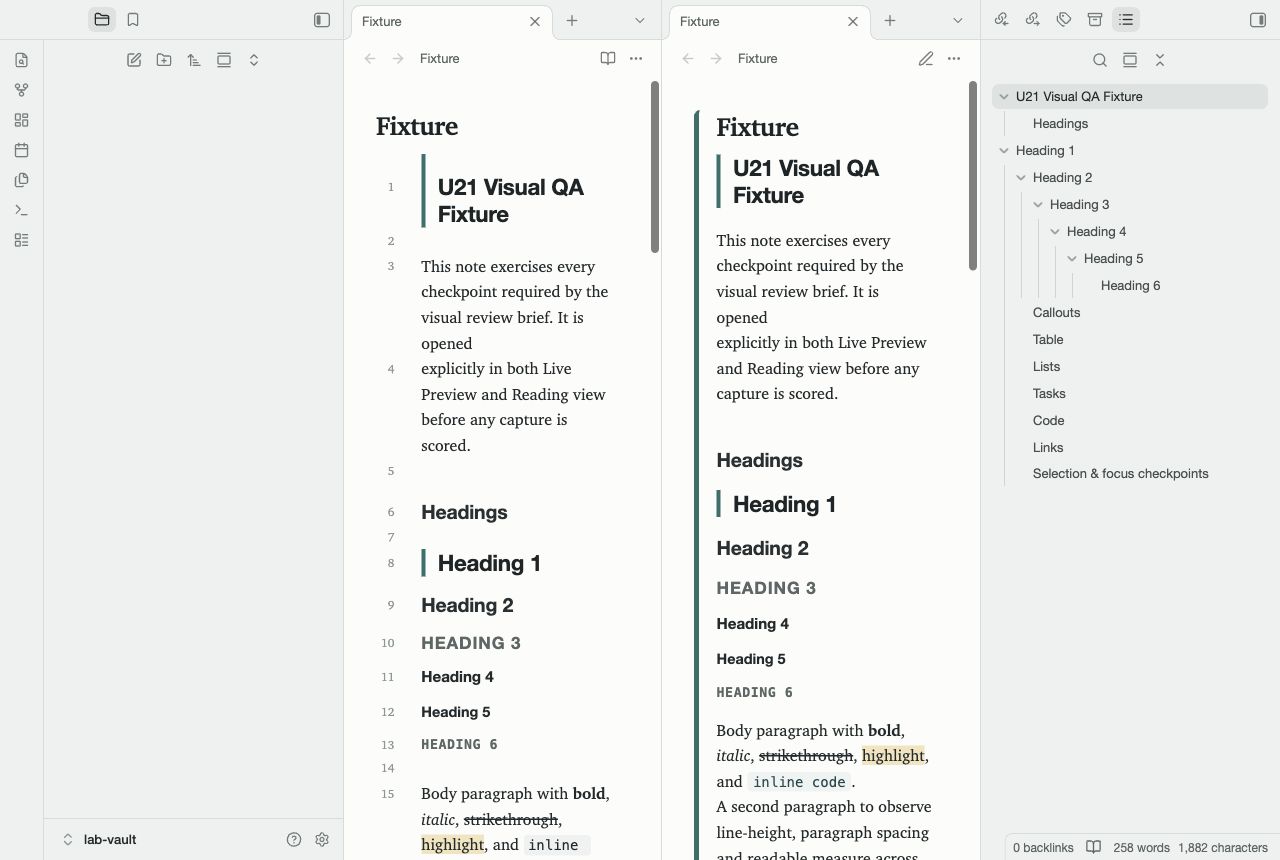
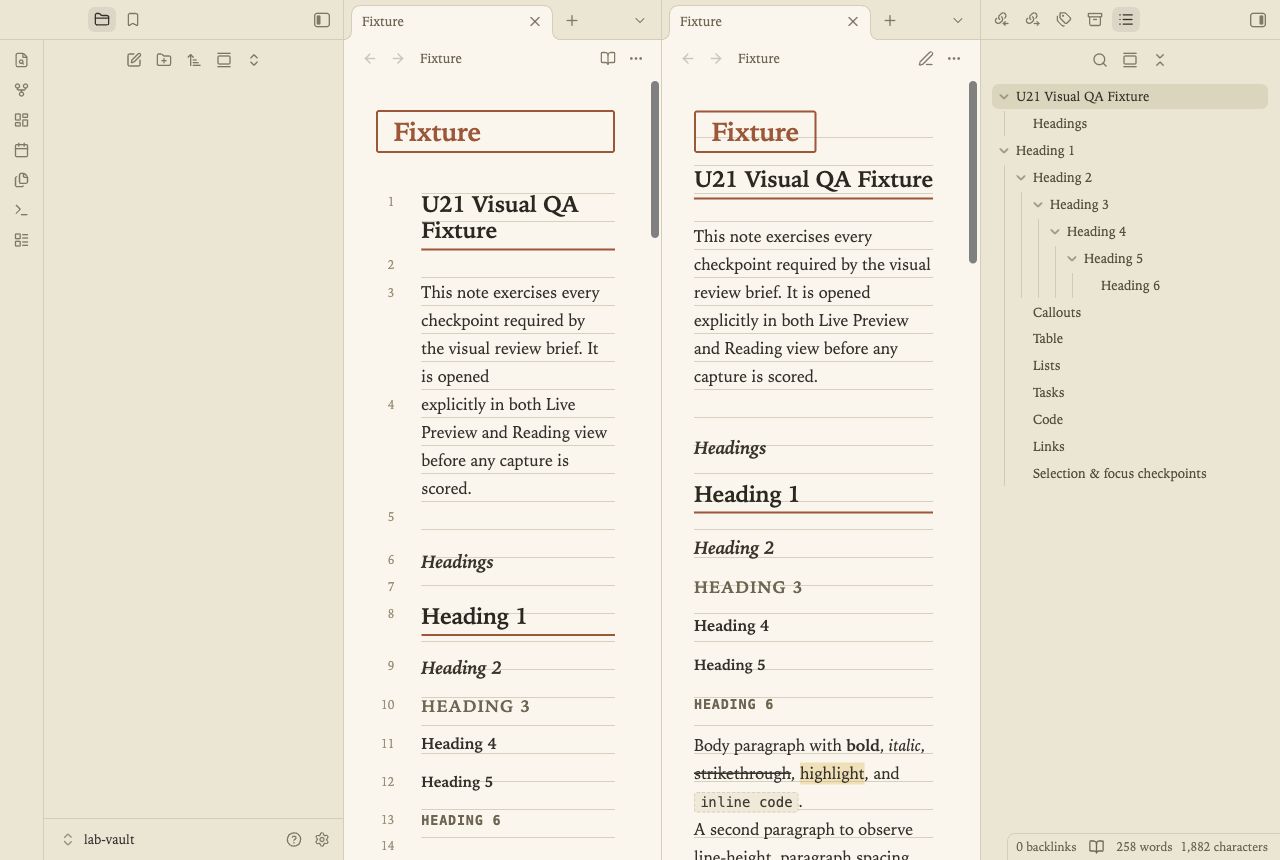
Theme previews for Obsidian
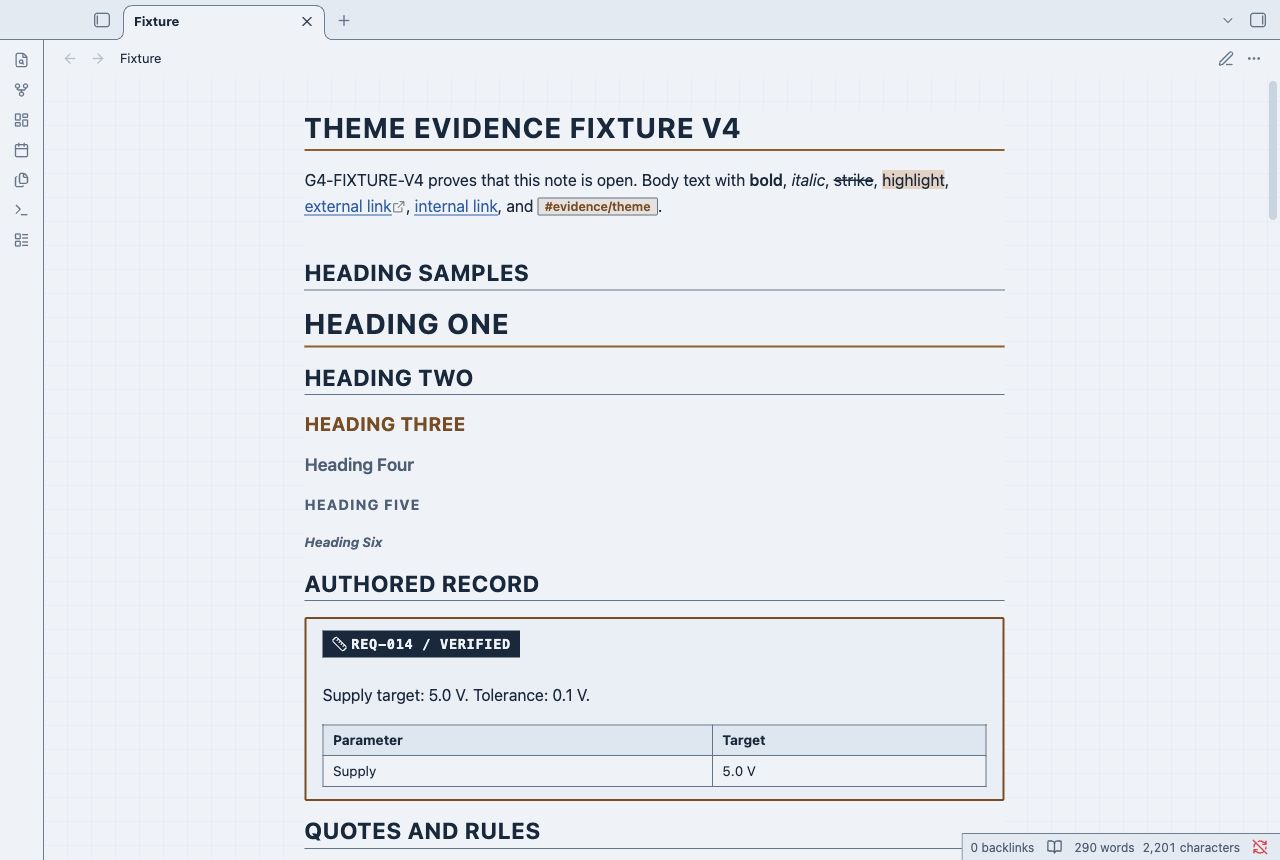
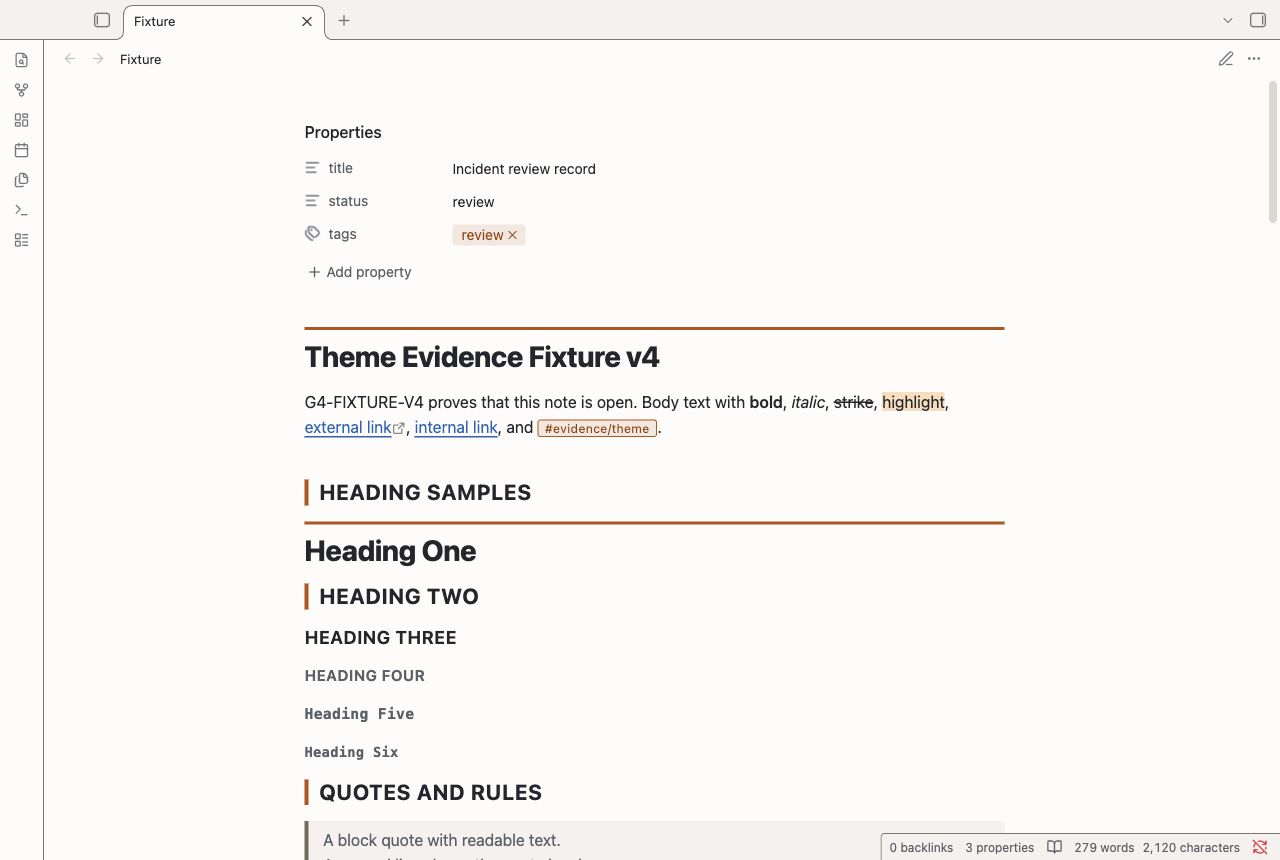
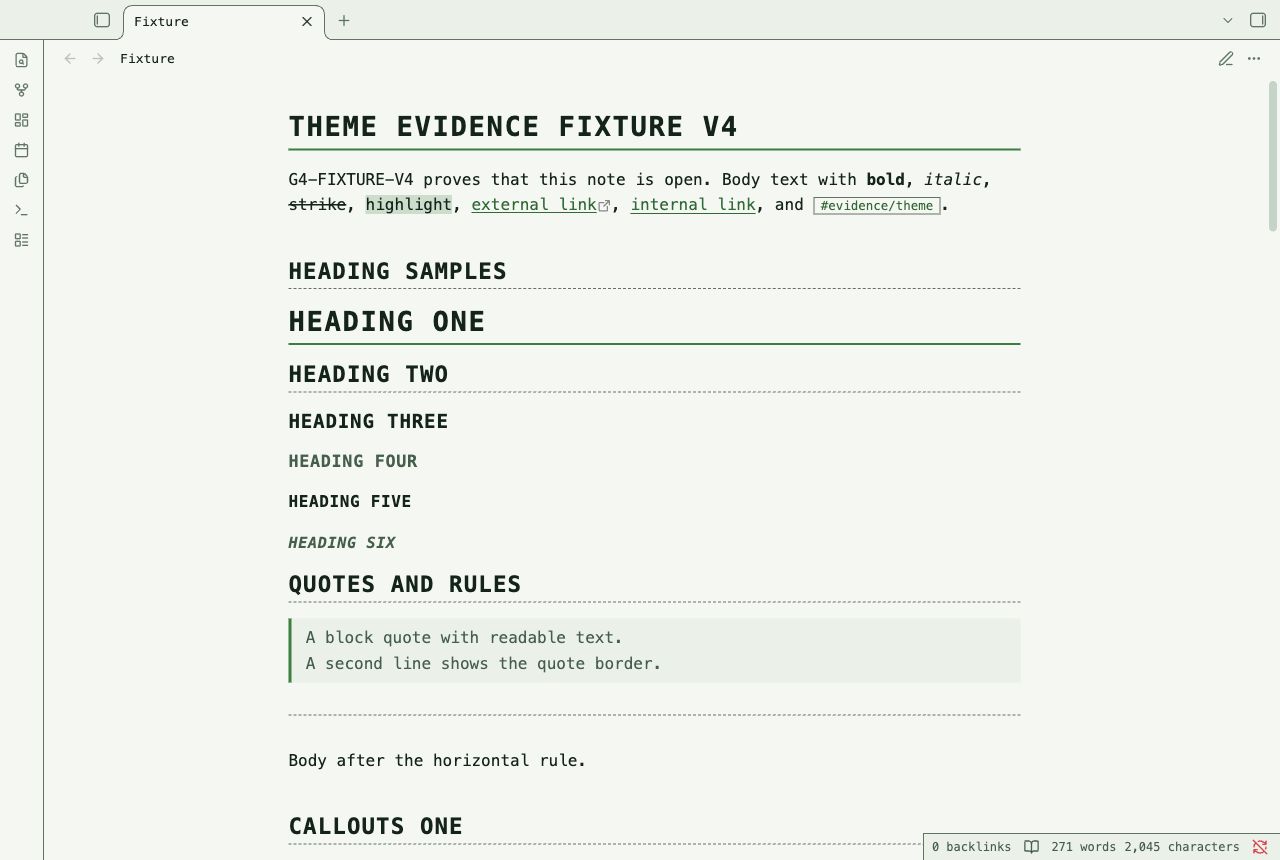
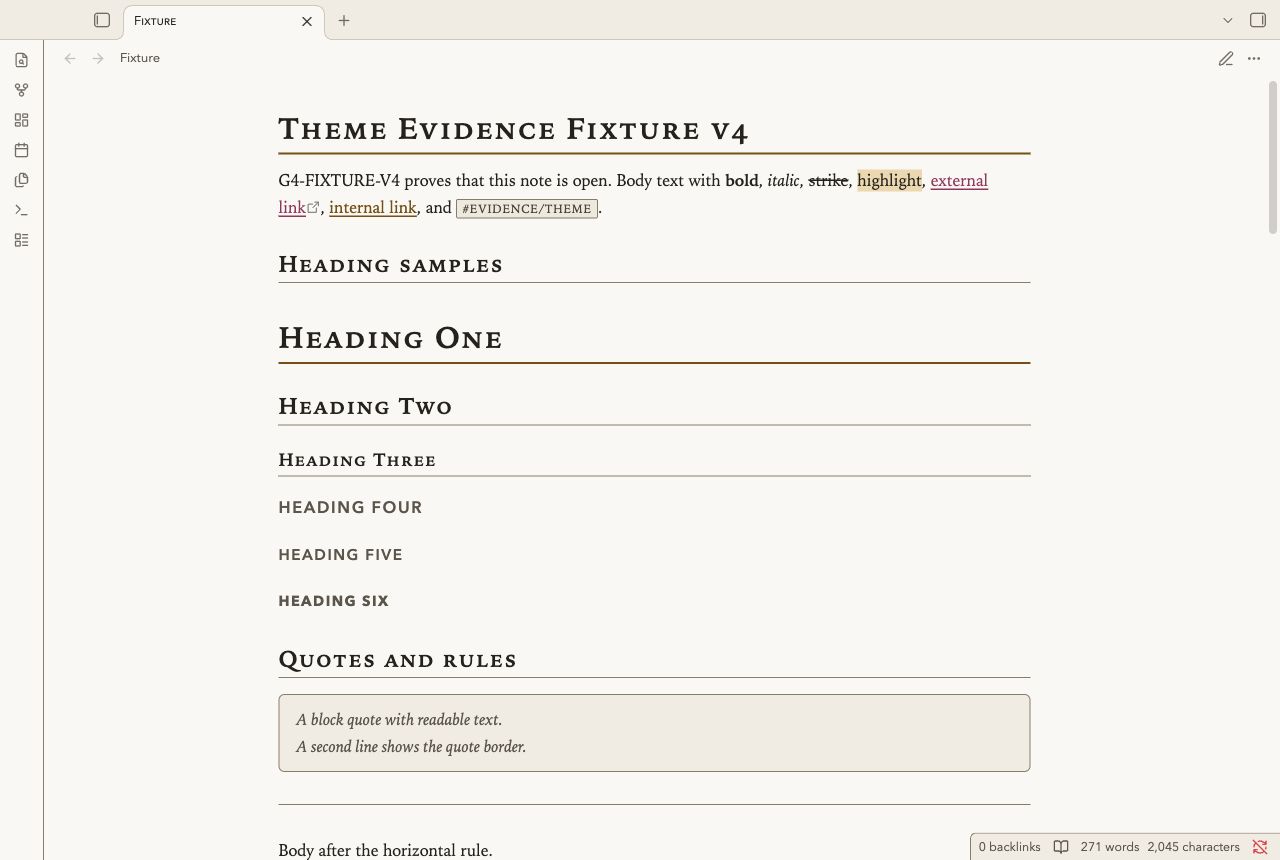
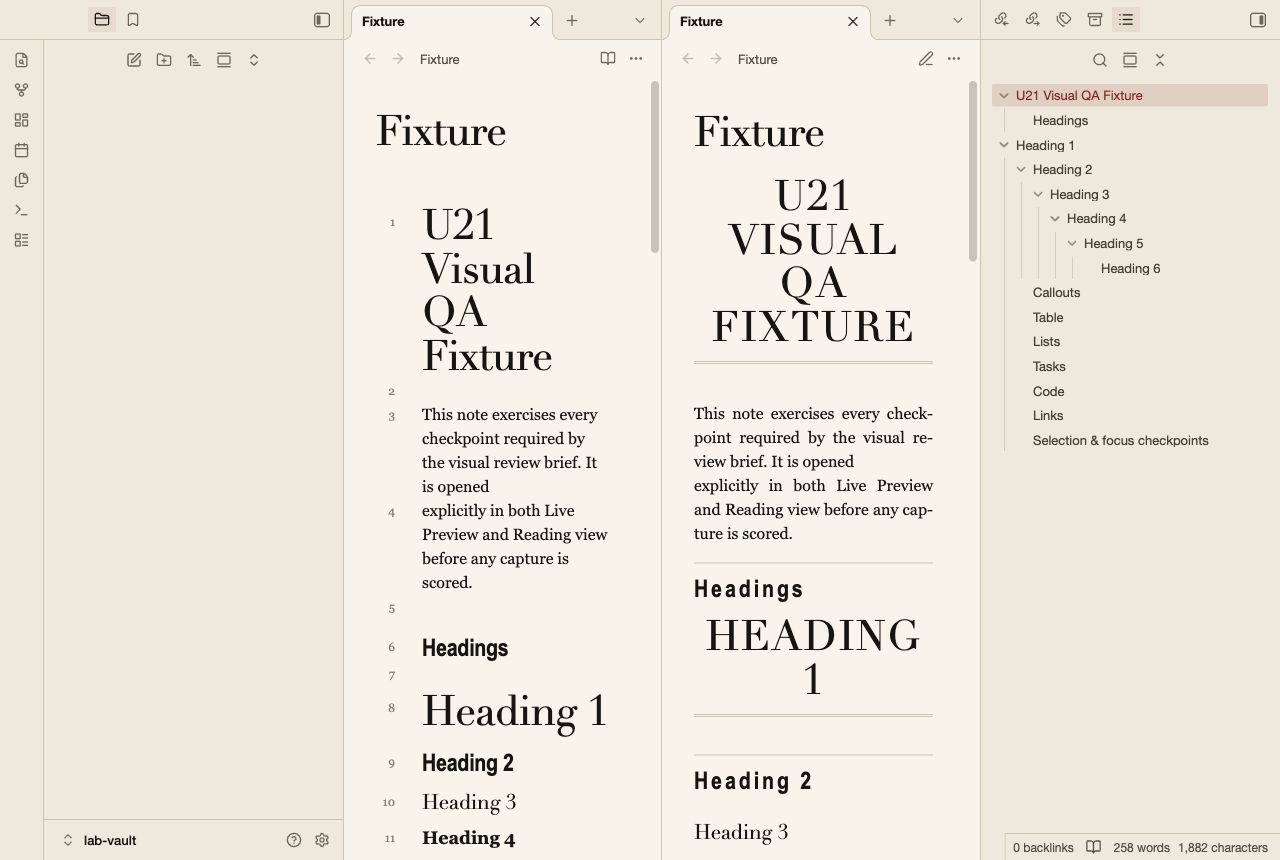
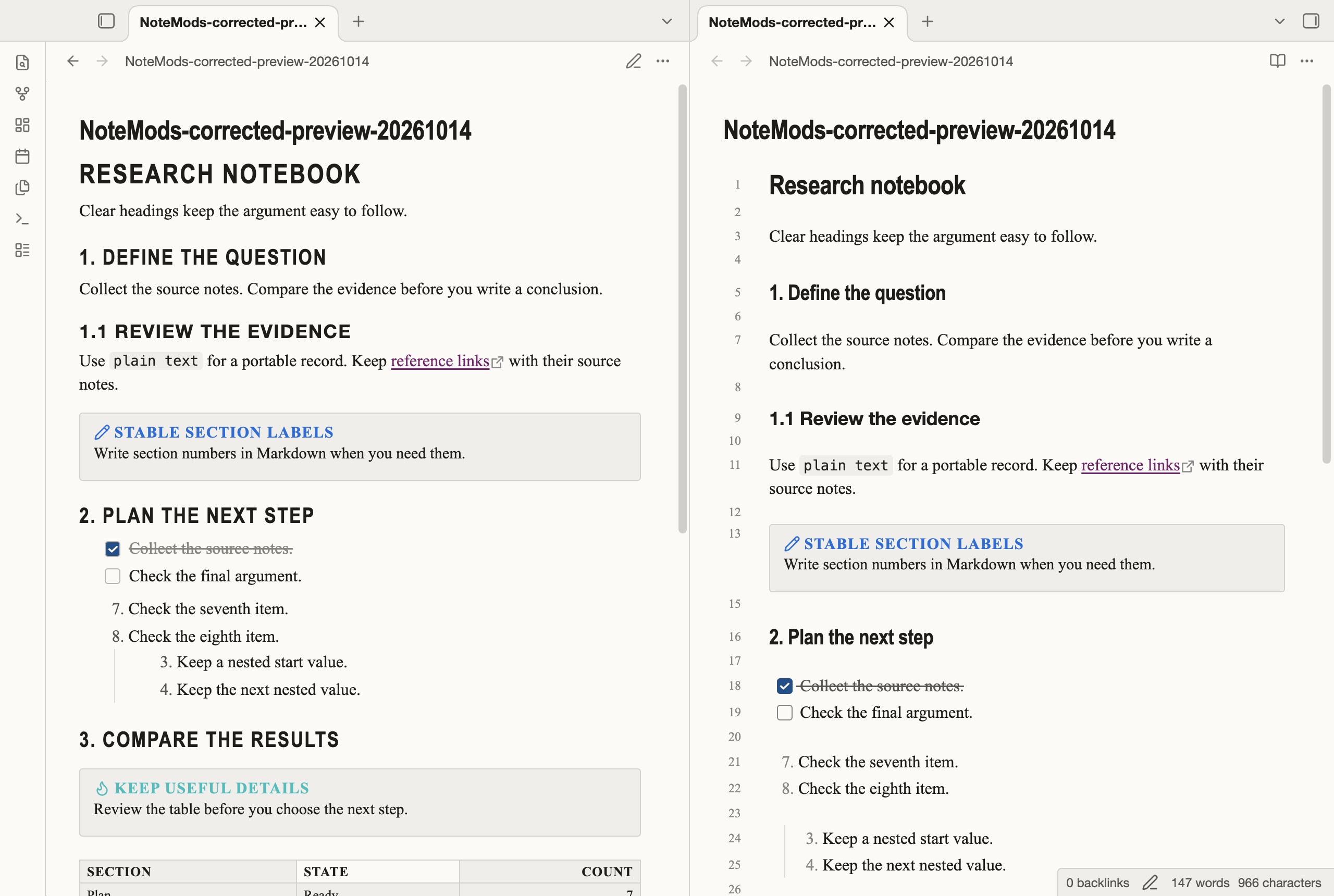
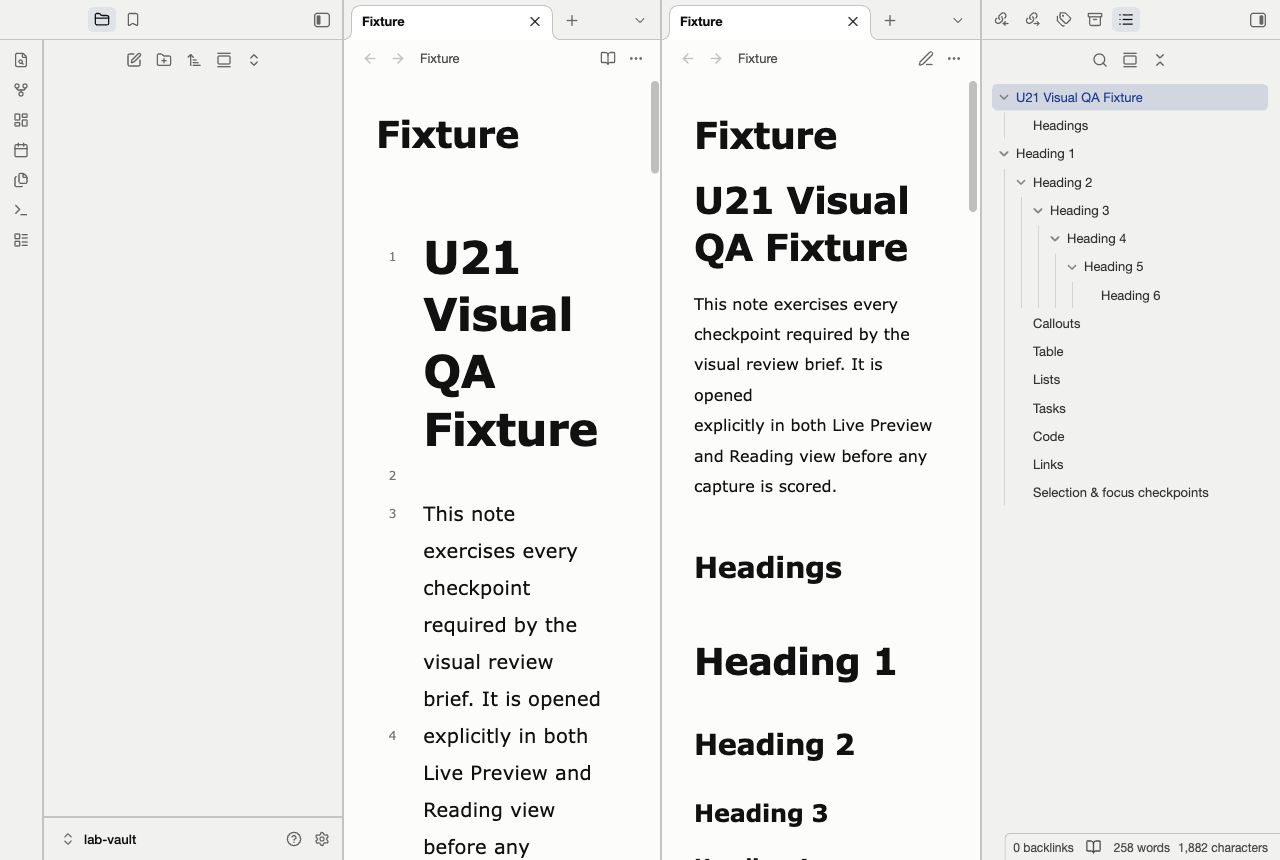
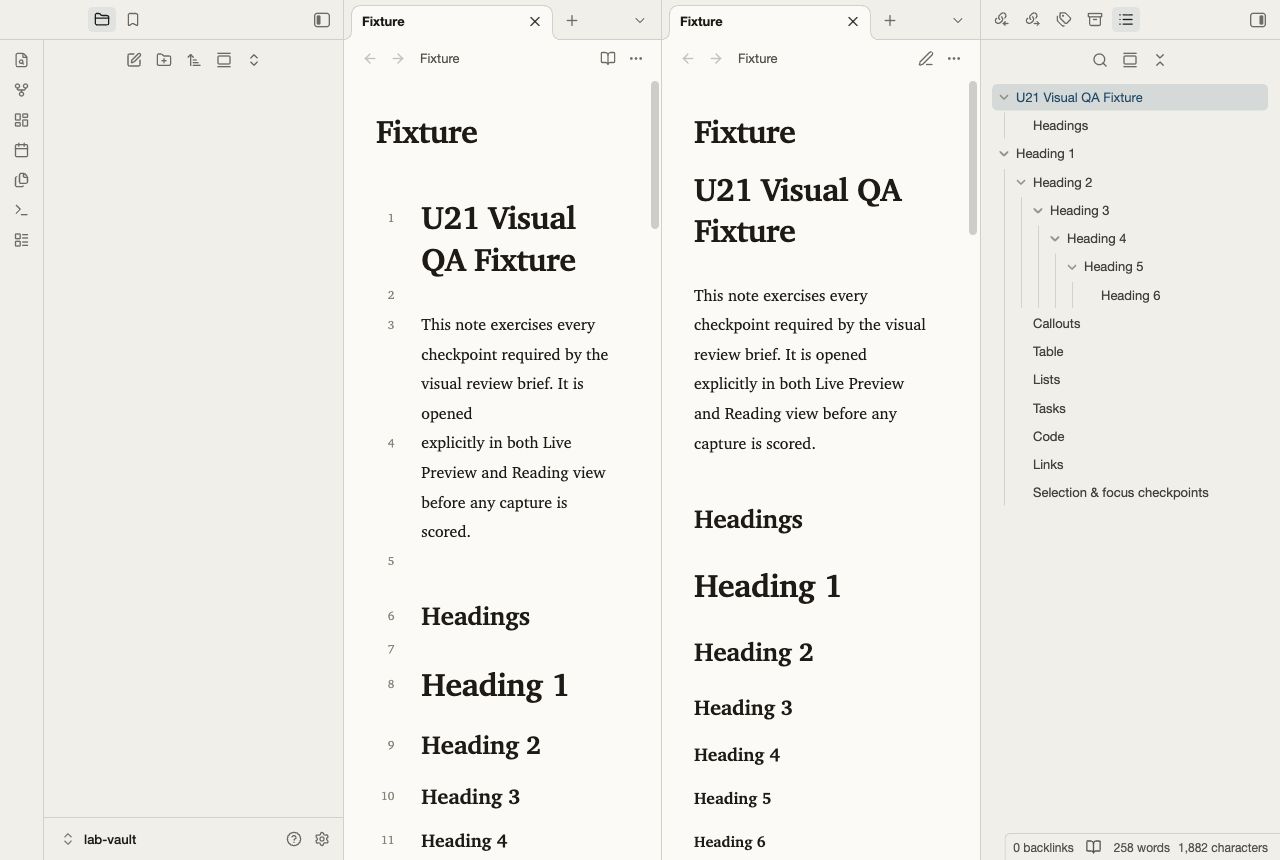
Choose from 7 free themes published in the Obsidian directory. See each theme in light and dark modes.
The catalog also keeps 33 archived previews. These are not released and have no download.
Archived screenshots may differ from a future release.
Browse free themesInstall these released themes from the Obsidian directory or download their published ZIP files.
A light and dark Obsidian theme for archive inventories.
Engineering Notebook gives specifications, measurements, and design records a blueprint page.
Incident Review is an Obsidian theme for postmortems, incident timelines, and on-call notes.
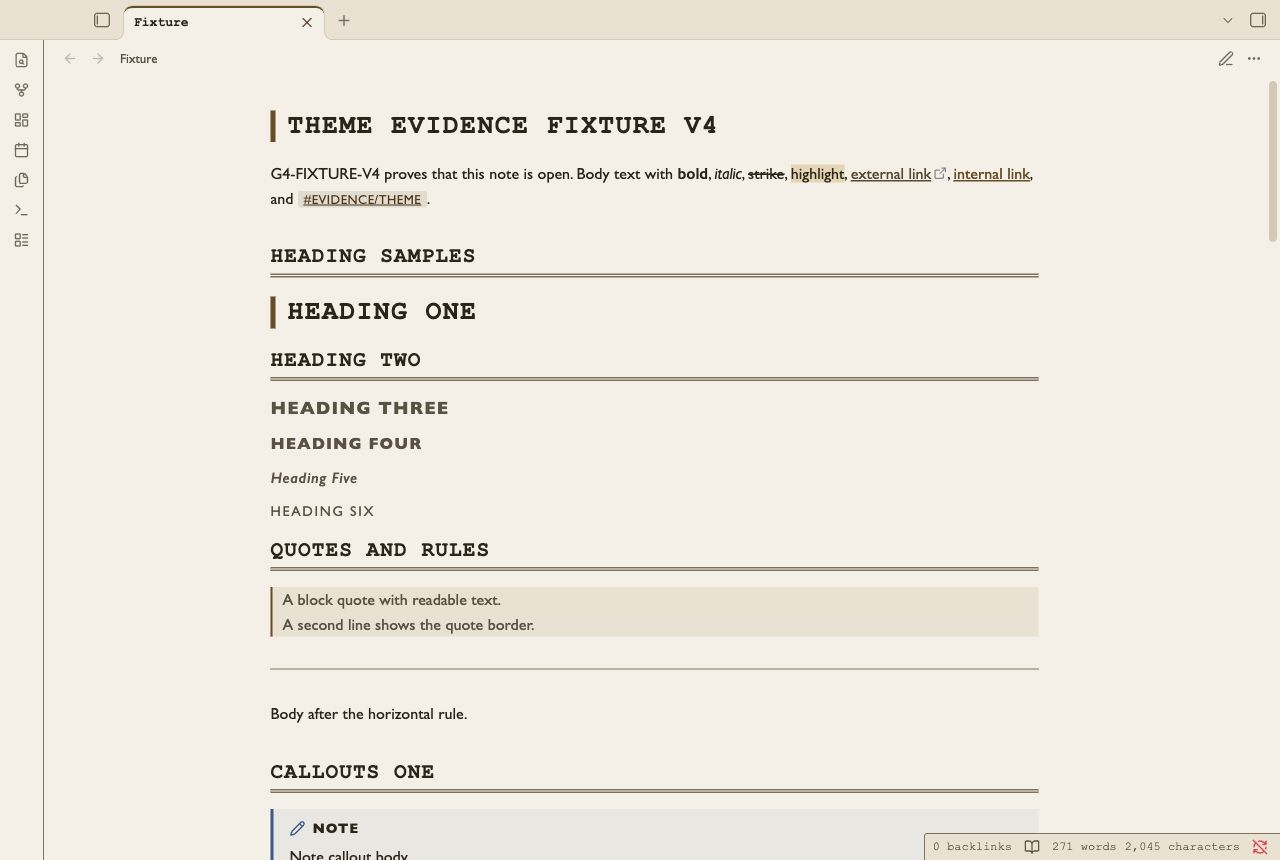
Terminal Notes is an Obsidian theme for command references, shell logs, and technical notes.
Gallery Marginalia is for image collections, exhibition notes and visual research.
Storyboard Frames is for scene outlines, sequence notes, and shot lists.
Waypoint Atlas is for location journals, region indexes and linked project maps.
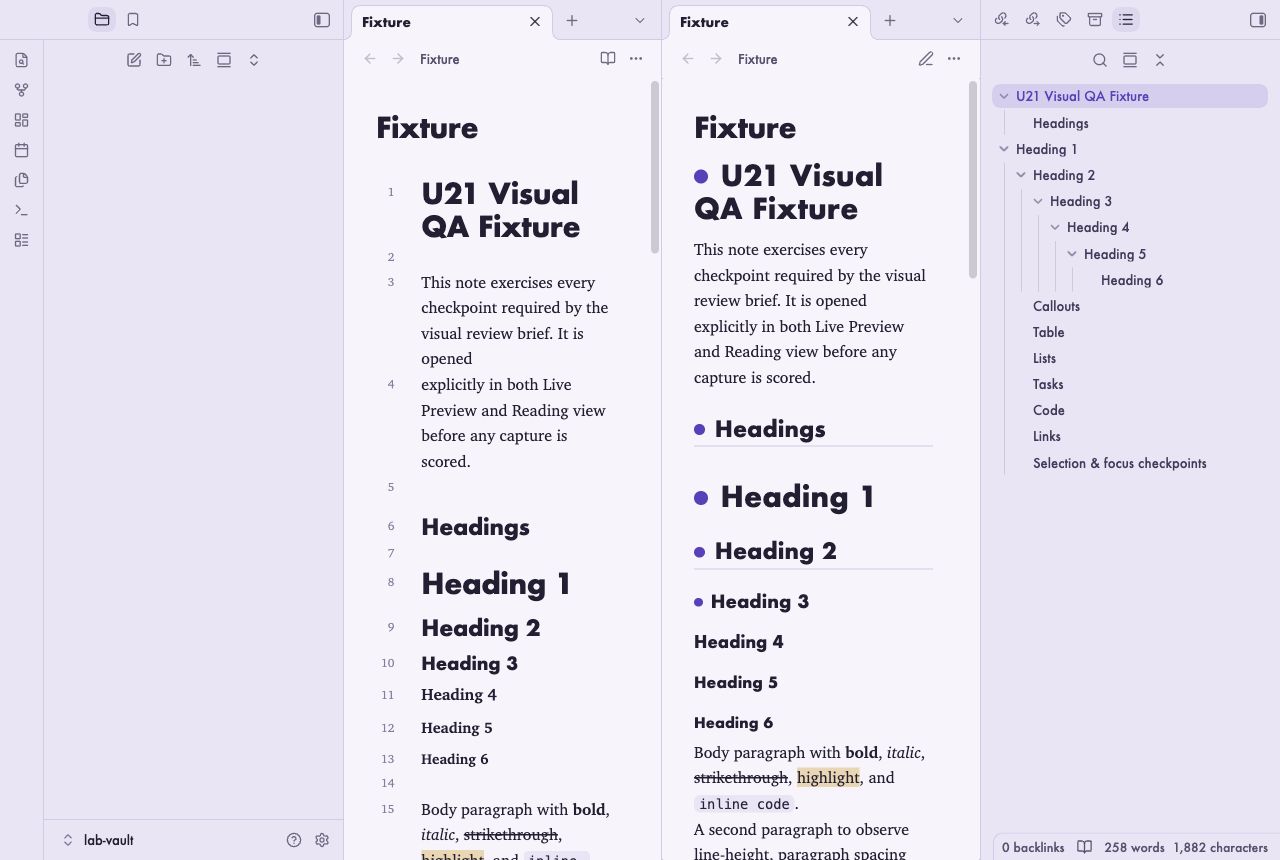
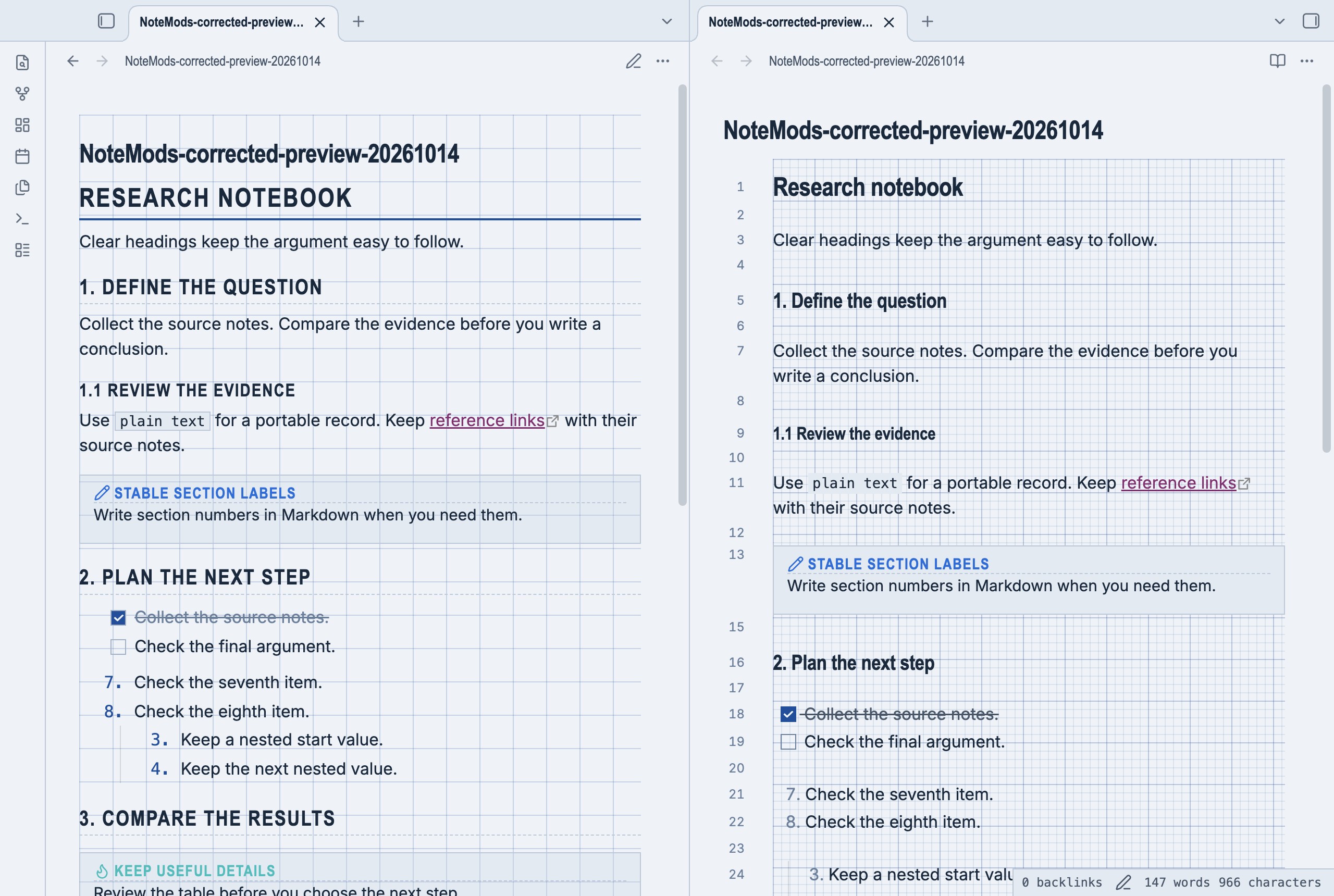
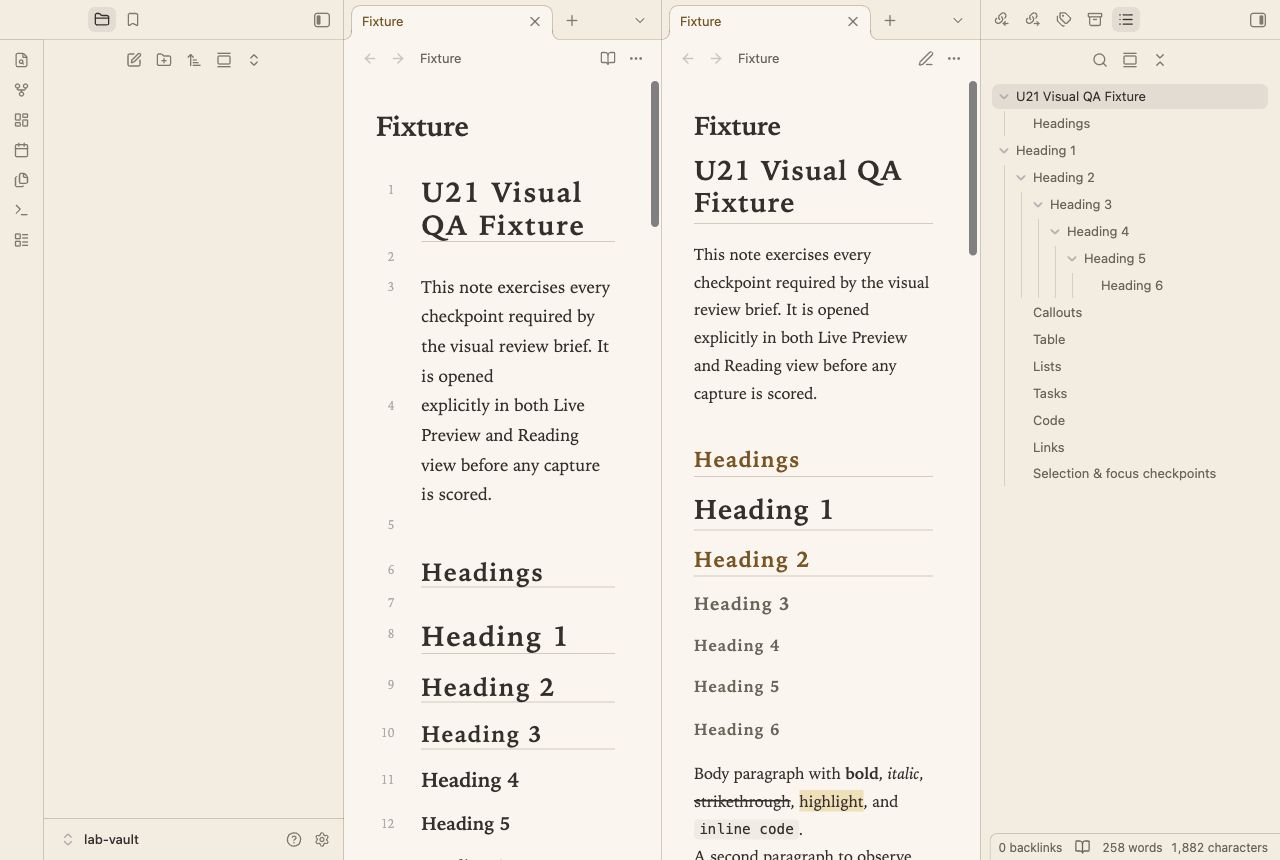
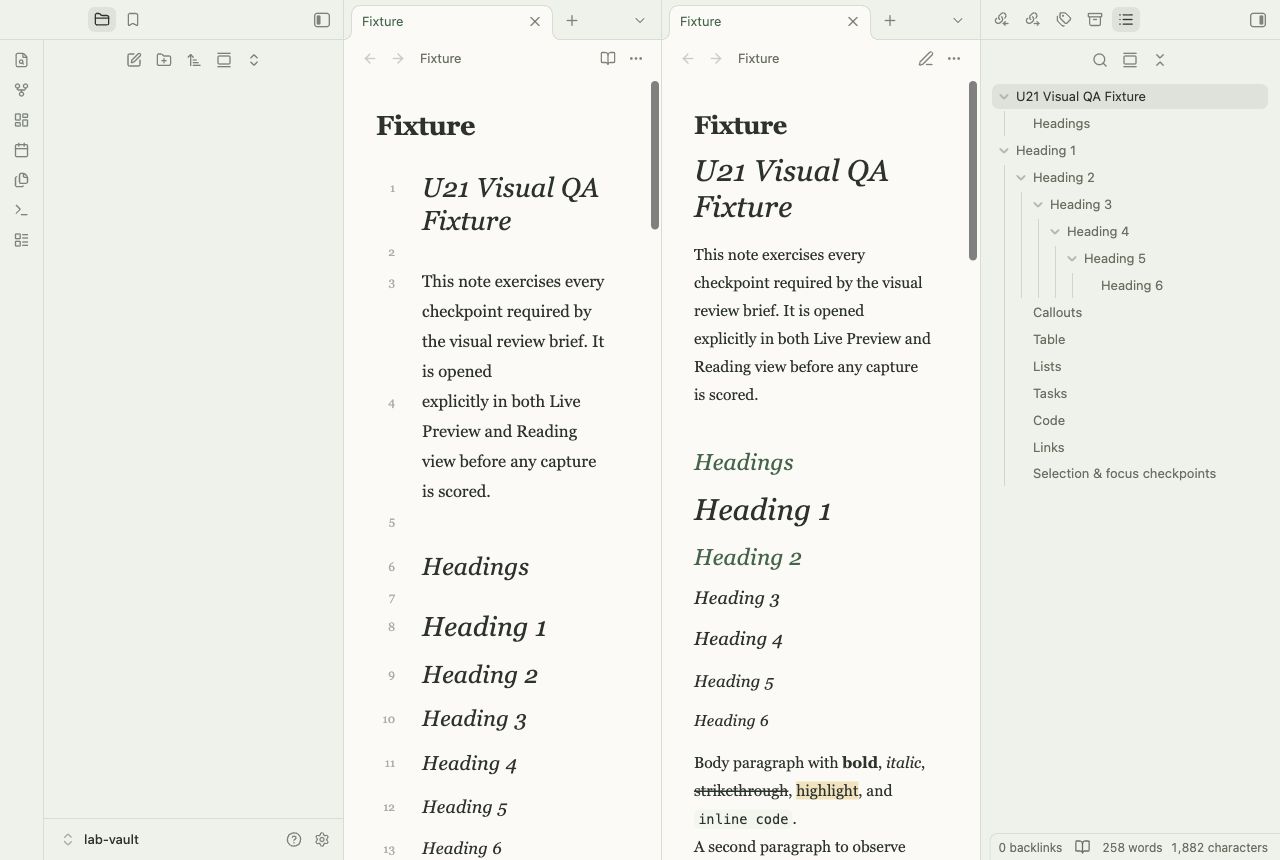
These screenshots are available to view. The themes are not available to install or download here.
Compare stronger contrast, roomier spacing and shape cues.
People who need the strongest available text/surface separation, thick visible focus, and never colour-only meaning.
Working in dim environments or preferring warm, lower-glare surfaces in both light and dark modes.
People who benefit from larger click/tap targets, larger checkboxes, and roomier line and paragraph spacing.
Long reading and note review where fewer borders, fills and colour accents reduce visual noise.
People with colour vision deficiency or anyone who wants meaning carried by shape and weight rather than hue.
Browse linked notes, indexes, glossaries and decision records.
Personal knowledge index: map-of-content notes and master indexes that list many entries, letters and page-like references for a whole vault.
Glossaries, glosses and terminology notes where every entry is a term with one or more definitions and cross-references.
Decision history and decision records (ADR-style logs): a dated sequence of choices, their status and their consequences.
Evergreen note gardens: continuously growing, densely interlinked notes where the links themselves are the primary reading surface.
Set out your tasks, meetings, weekly plans and operations notes.
weekly and calendar-adjacent planning
task-focused daily execution and checklist-heavy notes
meeting notes with action items
high-density operations and runbooks
decision logs and ADR-style records
Find a page style for books, reference notes and mixed languages.
Newspaper reading: dense but disciplined headlines for digests, newsletters and daily briefs that benefit from strong hierarchy and column layout.
Dense reference reading: manuals, specifications, glossaries and note collections where many facts must fit on screen without losing legibility.
Large-print reading for long sessions: comfortable body scale, wide leading and forgiving controls for users who prefer bigger text.
Multilingual reading: notes that mix Latin with CJK, Arabic, Hebrew, Devanagari, Thai or Korean, including ruby annotations and right-to-left paragraphs.
Long-form booklike reading: essays, chapters and notes read start to finish with an old-style serif, a narrow measure and indented, justified prose.
Arrange papers, citations, field notes and study cards.
Long-form academic writing and reading: papers, essays, literature reviews.
Literature notes and citation management: index-card style notes with tag-derived citation chips.
Fieldwork journals: observations, specimen logs, margin annotations.
Vocabulary notes, dialogue practice, and bilingual study spreads.
Spaced-repetition study: question/answer drills, recall grading, fast keyboard navigation.
Read code, specifications, runbooks and incident reviews.
Reference-style documentation: API endpoints, config keys, function signatures, and spec notes where tables and inline code dominate.
Notebook-style notes that mix prose with short, frequent code cells (learning notes, recipe/kata notebooks, annotated snippets).
Explore diagram notes, galleries, storyboards and linked concepts.
Linked concept-map notes: Zettelkasten-style vaults, topic graphs and concept hierarchies where relationships between ideas matter as much as the prose.
Diagram notebooks and engineering sketches: system designs, flow breakdowns, wireframe notes and specs where notes behave like annotated drawings on graph paper.
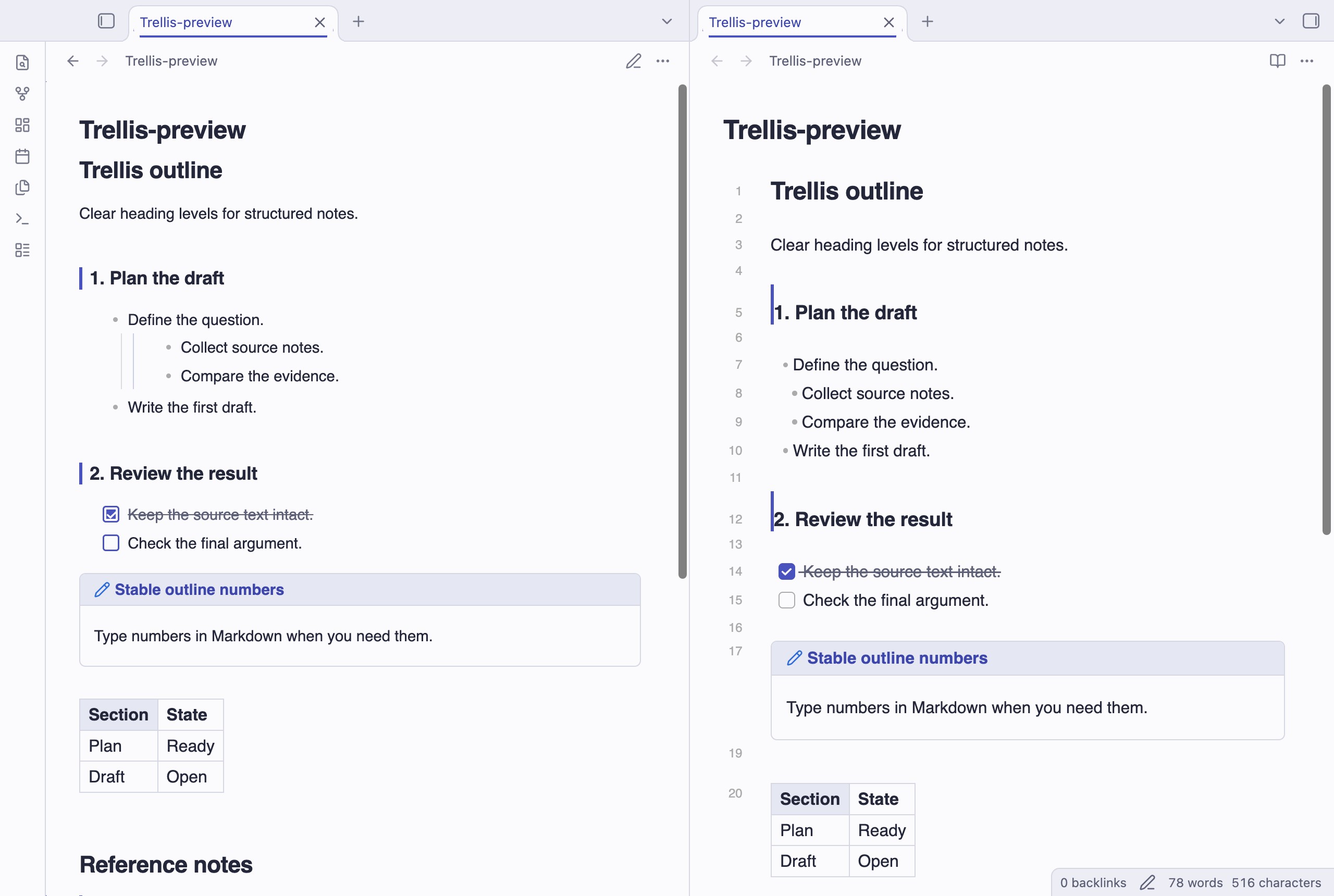
Try page styles for drafts, journals, editing and outlines.
Long-form drafting with a quiet serif page
Daily journaling with soft rounded surfaces
Editorial review and markup passes
Screenplay-flavored notes with monospace script body
Outline-heavy writing with structured hierarchy
Keep a copy of your vault settings before you test a theme. Select the default theme to return to your current layout.
Published free downloads contain CSS, a manifest, a README and the MIT license. Archived previews have no installable files.