Search Operators
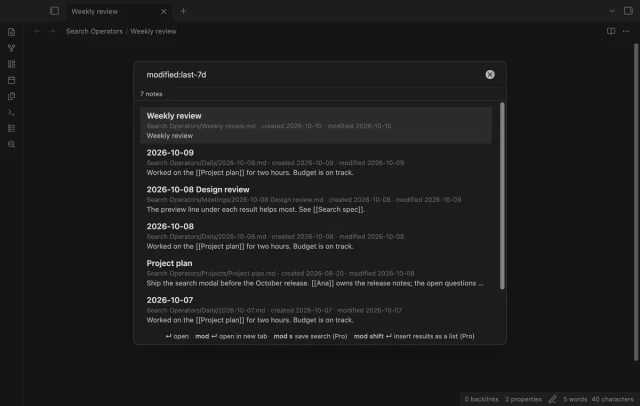
Find notes by date and links, with a preview for each result.
Check translation paragraphs for term errors.
MIT · no telemetry · core features free
The directory takes these platforms from the plugin manifest. The automated tests run in the desktop app only.
Directory facts fetched from community.obsidian.md/users/theluckystrike.
Translators who keep source and target prose in Markdown notes and need to review client terminology.
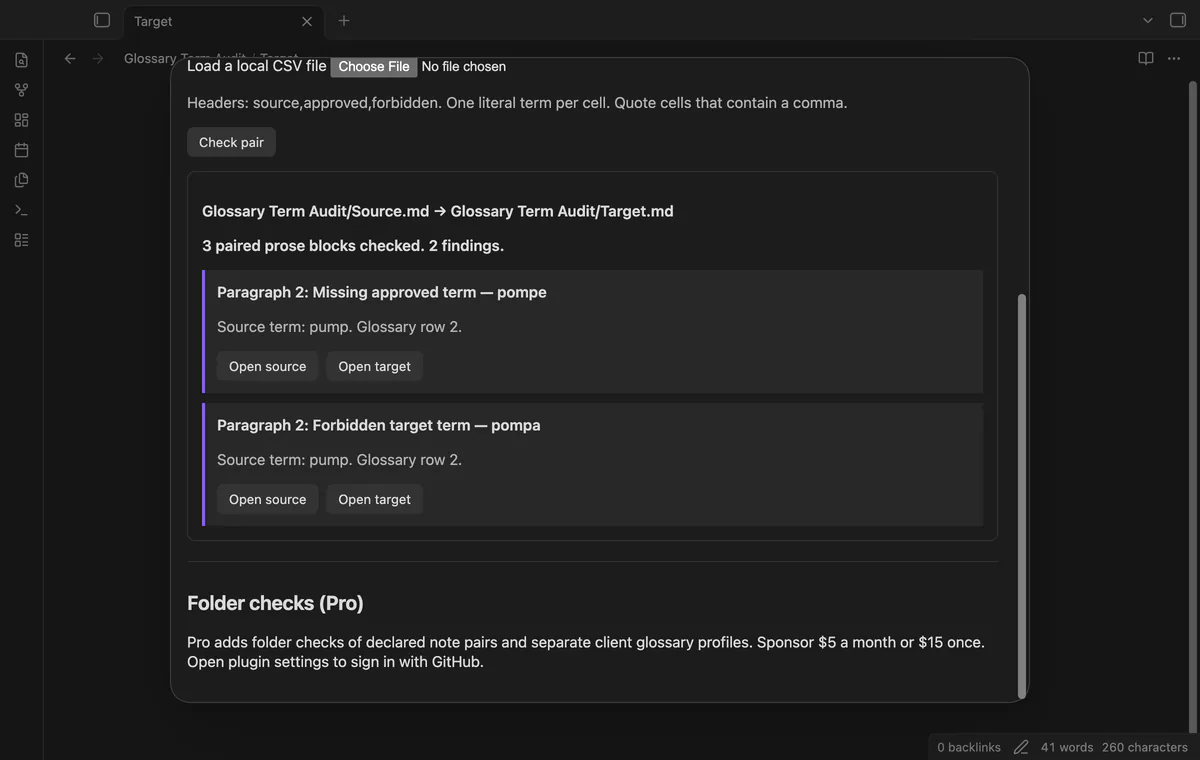
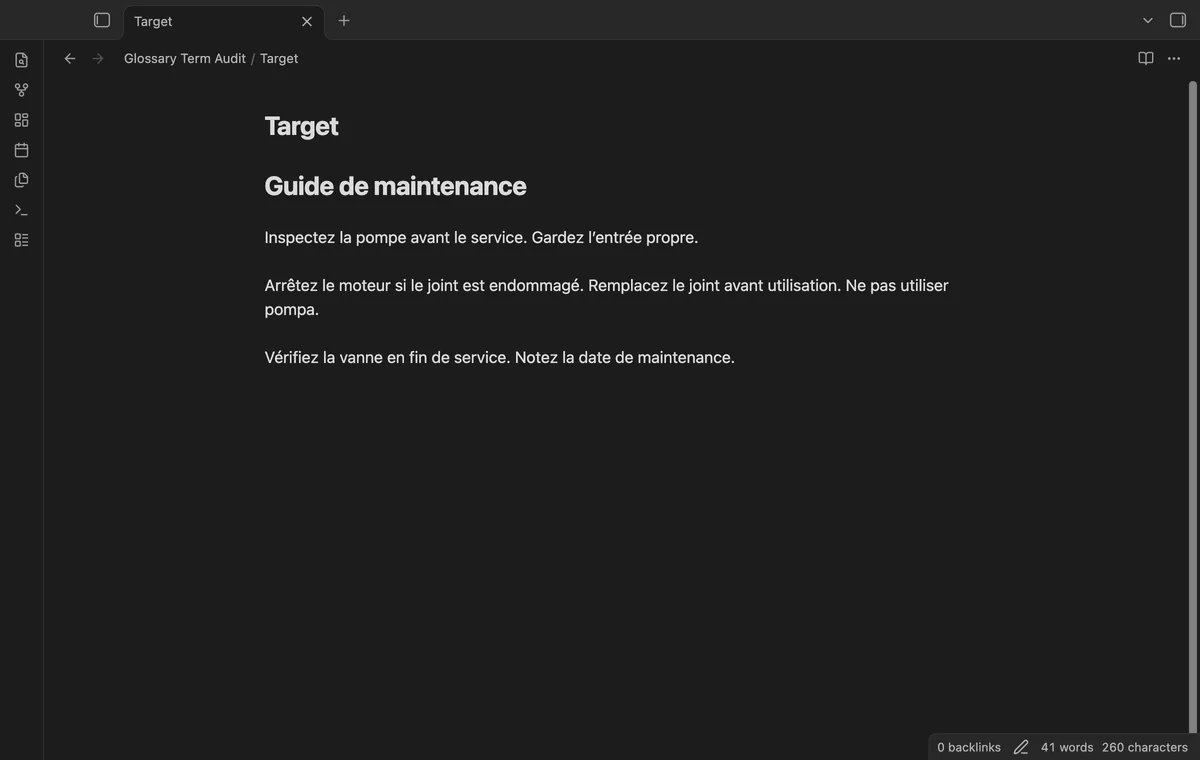
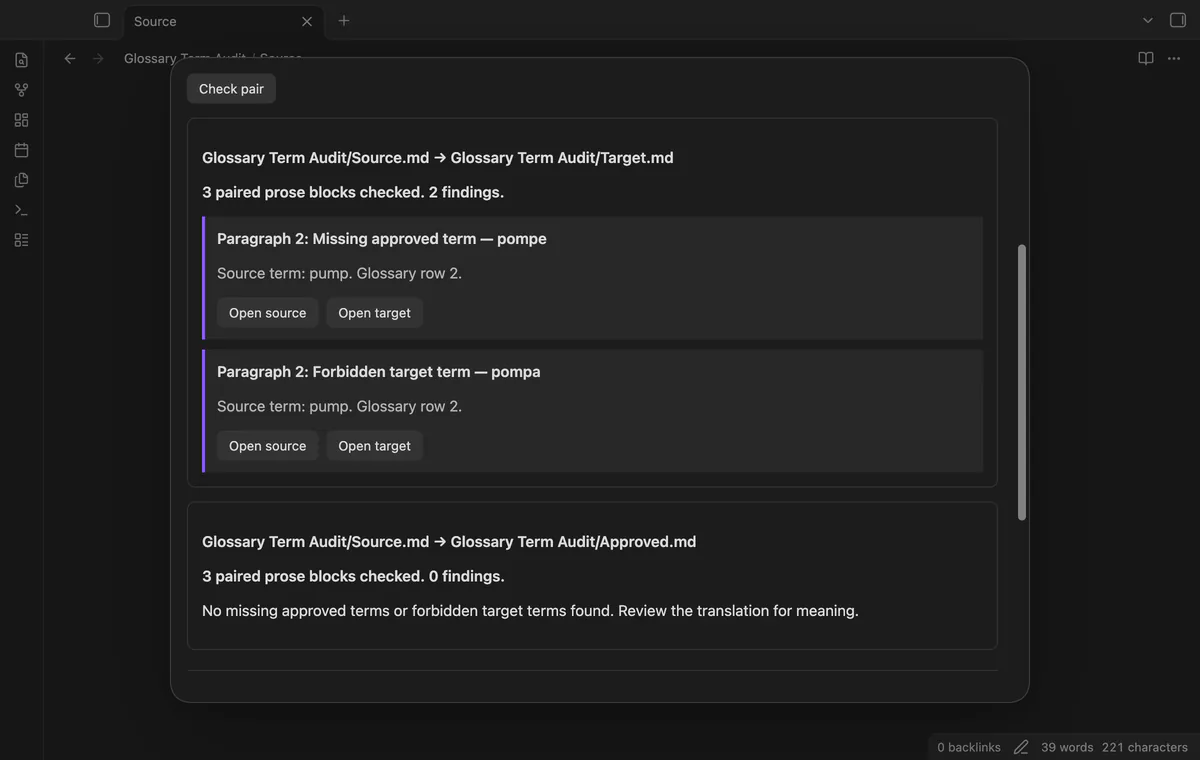
Choose your source note, its translation and a glossary CSV. Glossary Term Audit compares prose blocks by position and points you to literal term findings.
A zero-finding result is a starting point for review. It doesn't certify meaning, grammar or translation quality.
 Play demo
Search Markdown paths with the note pickers, or enter paths yourself. A completed pair check saves your selected paths and current glossary.
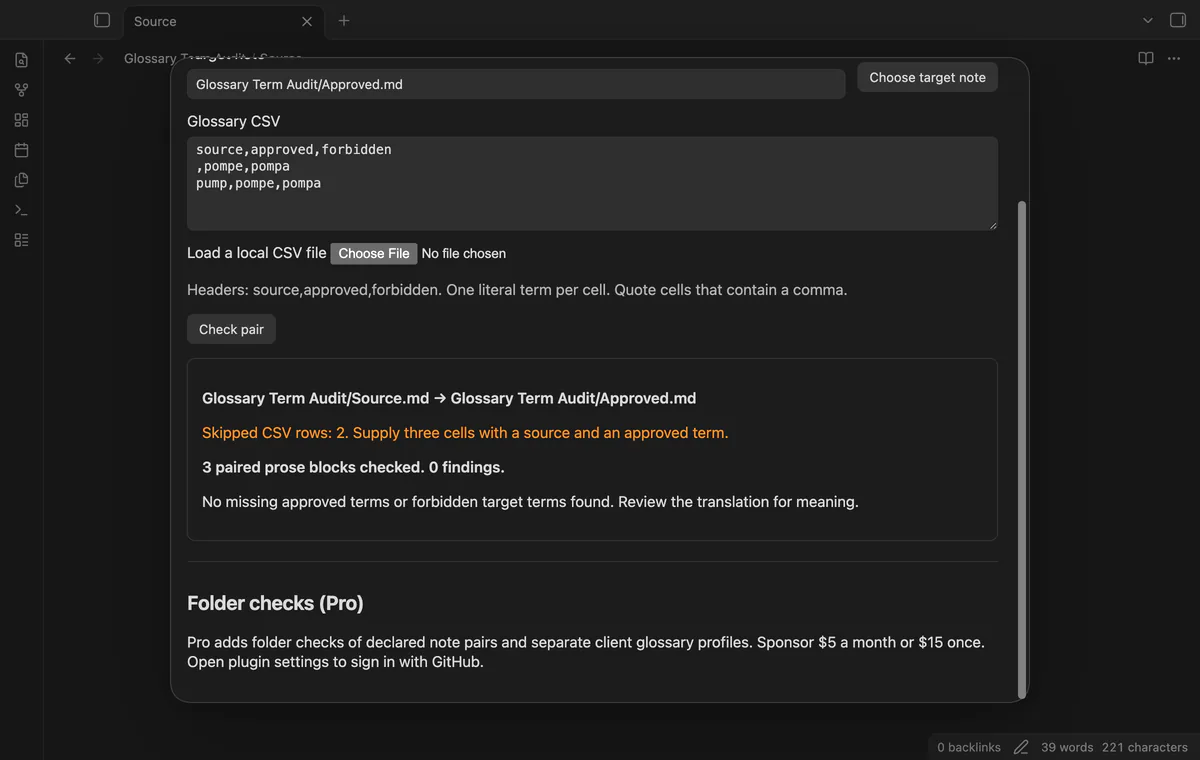
Load a local CSV or paste its text using source,approved,forbidden headers. Skipped rows appear with their starting row numbers.
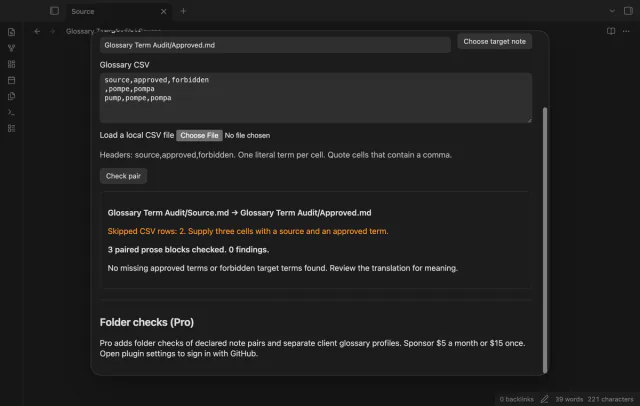
The check pairs consecutive nonblank prose blocks by position. Whole terms and Ignore case start enabled; change them in settings for substring or case-sensitive checks.
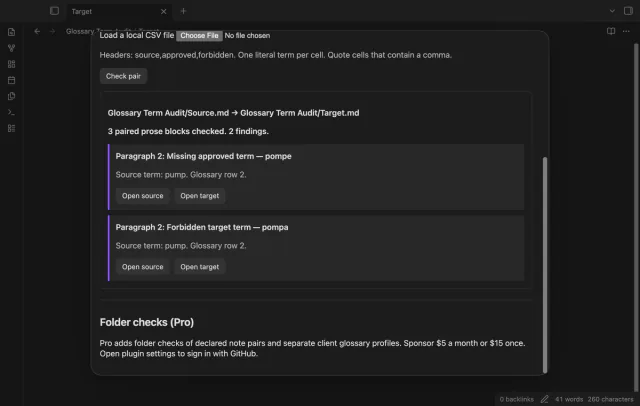
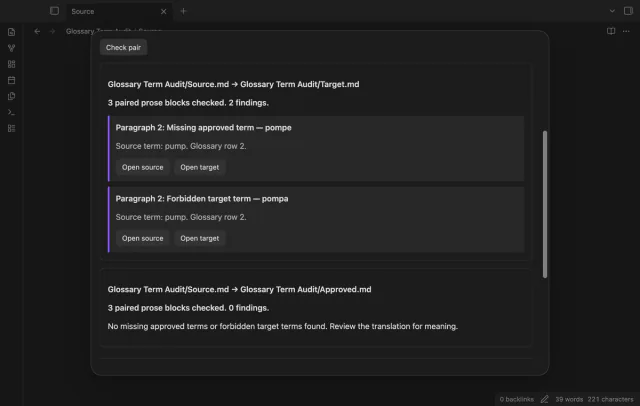
A matched source term requires its approved term in the paired target block. Forbidden target terms produce findings independently of source matches. Unequal prose counts stop the pair report.
Select Open source or Open target to move to the block start in editing view. Rerun the check after edits because saved positions describe the previous run.
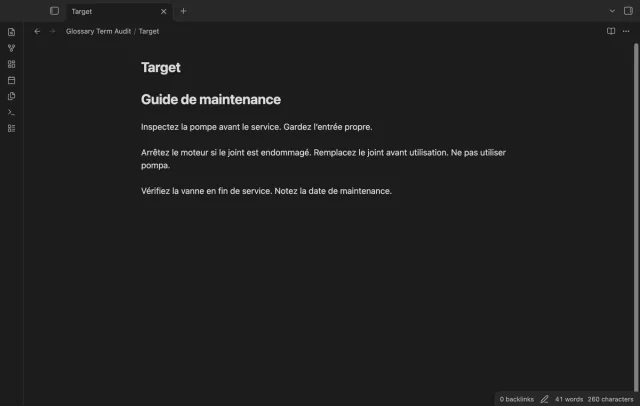
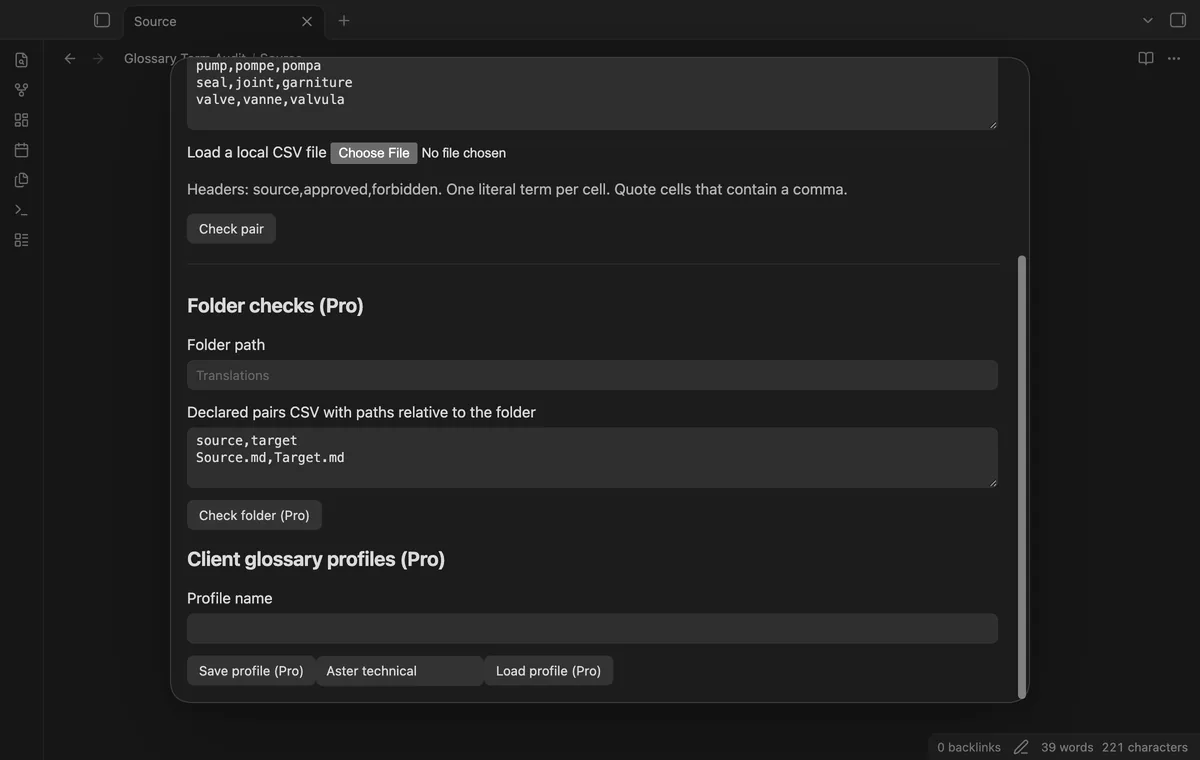
The single pair workflow is free; folder checks and saved client glossary profiles need Pro.
Pro costs $5 a month or $15 one time through GitHub Sponsors. One sponsorship turns on Pro in every plugin that has it.
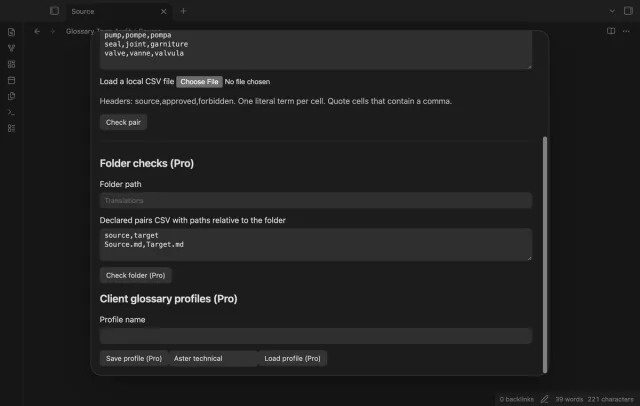
Supply one folder and a CSV with source,target paths relative to it. The plugin checks declared pairs rather than guessing from filenames. A missing note stops the operation.
Save your glossary under a client name and load it for another check. Reusing the name replaces that profile. Profiles hold glossary text, without note paths or matching options.
needs
steps
Run Check a translated note pair from the command palette.
Choose your source and target notes, then load or paste the glossary CSV.
Select Check pair and resolve skipped rows or alignment errors.
Open affected paragraphs, review the wording and rerun after edits.
If the app can't find a new plugin yet, try again later. Obsidian says a plugin that passes the review shows in the app within 24 hours.
Need a change for your team? I build custom Obsidian plugins and features.
No. The check reads the notes and stores its own settings. You make edits in the affected note yourself.
It compares literal surface forms. Add separate glossary rows for the forms you need to check.
No. Blocks with equal counts can still appear in a different order. Compare their contents before relying on the findings.
No requests occur before you select Sign in with GitHub; sign-in sends a client ID, scope and device codes to github.com. After sign-in, api.github.com receives token-authenticated sponsorship queries for tier and payment totals; successful checks cache seven days, failures retry after six hours. Refresh requests an earlier check; notes, paths and vault data stay local, with no telemetry.
Tell me what is broken in Glossary Term Audit, or what it should do next.
Glossary Term Audit 1.1.0, MIT license
MIT · no telemetry · core features free
Find notes by date and links, with a preview for each result.
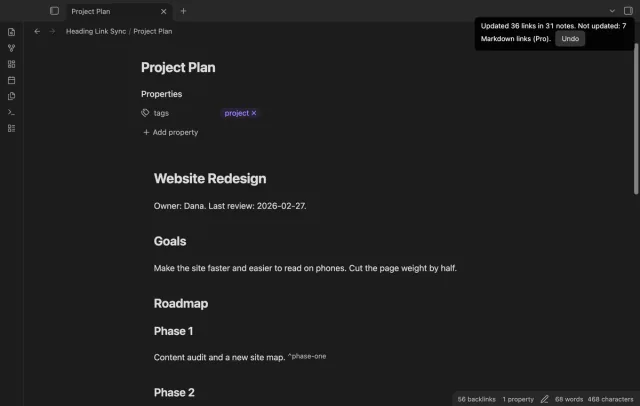
Update heading links and embeds when you edit a heading.